

Marketing for Coaches: How to Build Trust, Attract Clients, and Grow

Table of Content
Subscribe To Get
WordPress Guides, Tips, and Tutorials


Most coaches do not have a traffic problem. They have a trust problem. People do not hire a coach because they saw a clever post. They hire when they feel understood, believe the coach can actually help, and see enough proof to take the next step. That means marketing for coaches is less about shouting louder and more about making trust visible.
If you are a coach, your marketing has one job. Help the right people understand who you help, what problem you solve, and why working with you is worth the money. That sounds simple. It is not always easy. Coaches often get stuck between two bad options. One side is aggressive marketing that feels fake.
The other side is staying quiet and hoping referrals do the work. Neither one is enough on its own. The better path is to build a system that makes your expertise visible, your message clear, and your audience connected to you before they ever book a call. That is where a strong content strategy and a community layer matter.
So, nowadays, about 60% of coaches have launched an online course as part of their business. Now, if you are building a coach community on WordPress, FluentCommunity gives you a practical way to turn your audience into a real relationship, not just a list of followers. This article breaks down how coaches can market themselves in a way that feels human, useful, and sustainable.
Start With One Clear Promise
Coaches overcomplicate marketing because they try to speak to everyone. If your message says you help:
- Professionals
- Entrepreneurs
- Women
- Men
- Leaders
- Creators
- Teams
When your message says almost nothing, it’s usually because the promise isn’t clear. Good marketing always starts with a specific promise. You need to clearly communicate who you help, what problem they’re facing, and what changes occur after working with you.
For example, you might say, “I help burned-out founders build a healthier weekly structure,” or “I help new coaches sign their first three clients,” or “I help executives communicate more clearly under pressure.”
The more specific your promise is, the easier it becomes for the right person to recognize themselves in it and think, “That’s exactly me.” Without that level of clarity, even well-crafted content tends to get overlooked.
Build Authority Through Useful Content
Coaches do not need to post more; they need to post better. People follow coaches who give them something they can actually use. That doesn’t mean giving away everything, but it does mean teaching in a way that clearly shows you understand the problem. Useful content for coaches usually falls into a few categories, including how-to posts, mistake breakdowns, before-and-after examples, mindset reframes, short frameworks, client lessons, case studies, and answers to common objections.
The key is to make every piece of content answer one simple question: “Why should I trust you?” When your content helps someone solve a small problem, it builds trust, and over time, that trust makes them more likely to rely on you for bigger challenges.
Use Personal Story the Right Way

A lot of coaches overshare. They tell long emotional stories with no point. Others stay so polished that they sound like they were assembled in a boardroom. The sweet spot is somewhere in the middle. A personal story works when it does one of these:
- Shows how you solved a real problem
- Explains why you care about the work
- Proves you understand the client’s world
- Gives context to your method
Do not tell your story just because it is your story. Tell it because it helps the reader understand how you think.
Example:
Instead of saying, “I hit burnout and learned a lot,” say, “I kept seeing clients fail because they were trying to scale before fixing their offer. That is why I built my coaching around clarity first.” That is useful. It builds authority. It also sounds like a human being wrote it.
Turn Social Media Into a Visibility Engine
Social media is still useful for coaches, but only when it’s used to build trust rather than just reach. The best coaching content typically does three things well: it makes a clear point quickly, speaks directly to a specific pain, and offers a practical next step. You don’t need to post every day, but you do need to be consistent enough that people remember what you do. A simple and effective content mix could include one educational post, one personal insight, one client lesson, one opinion post, and one community prompt.
This kind of balance helps your audience understand how you think and how you support others. Instead of relying on generic motivation, focus on making people feel seen.
Because people don’t hire coaches just because they feel inspired; they hire when they feel understood and can clearly see the value of the process. Check out the best social media plugins for WordPress to use for your community.
Make Community Part of the Marketing
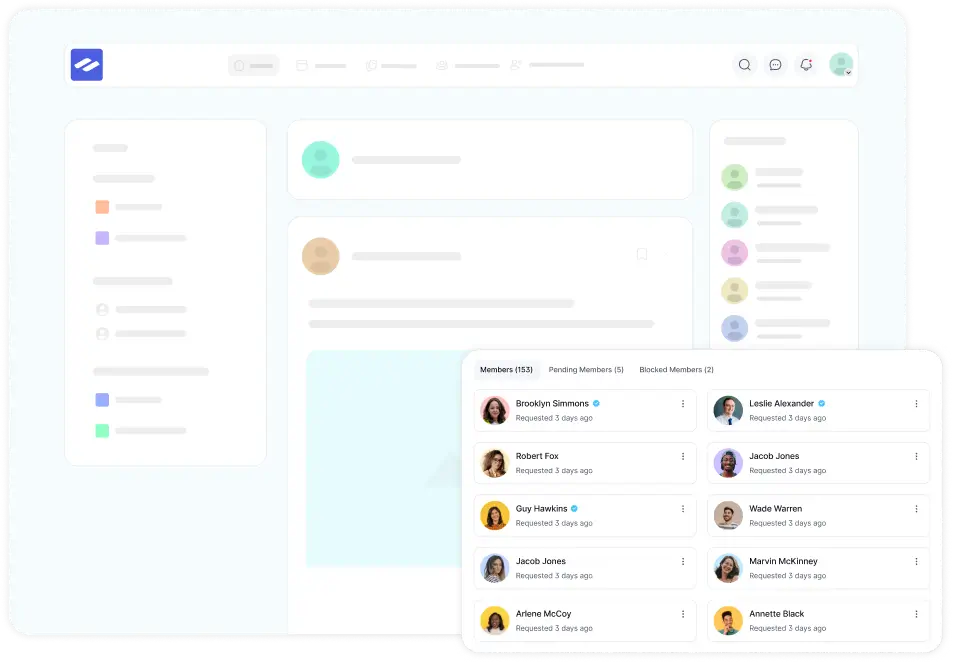
For coaches, community is not just a retention tool. It’s a powerful marketing asset. A well-built community allows prospects to experience how you think before they ever buy, while giving current clients a space to stay engaged and connected. It naturally generates word-of-mouth, testimonials, and social proof without forcing it. This is where FluentCommunity becomes especially valuable. If you’re building a coaching business on WordPress, it lets you create a branded space where members can introduce themselves, ask questions, share progress, join discussions, access resources, and support one another.
That matters because coaching is built on trust, and people are far more likely to invest when they see others getting real value. A public or semi-public community can quietly do much of your marketing for you. New visitors can see genuine engagement, prospects can observe your coaching style, members share wins that become proof, and your content lives in a space you fully own instead of being trapped on a third-party platform.
For coaches, this is incredibly powerful. You’re not just posting content; you’re building visible proof of transformation. Whether you’re running a paid coaching program, a free support group, or a lead magnet community, FluentCommunity gives you a stable place to build relationships that won’t disappear when platform rules change.
FluentCommunity is a complete community platform designed for businesses. Download now to create and manage your community.
Use Email to Build Depth
Social media gets attention, but email builds depth. A coach who relies only on social media is always at the mercy of changing algorithms, while a coach with an email list owns the relationship. A strong email strategy doesn’t have to be complicated. It should welcome new subscribers, share useful advice, tell trust-building stories, invite readers into your community, and present your offers in a natural, non-pushy way. Email shouldn’t feel like a recycled feed of social posts; it should feel more personal and direct.
The most effective coaching emails often follow a simple structure: start with something you’ve noticed, explain why it matters, offer one actionable takeaway, and then guide readers to the next step if they want more help. This approach works because it respects the reader’s time while steadily building trust and authority.
Show Proof Without Looking Desperate
Proof matters, but many coaches handle it poorly. They either overload their pages with testimonials, rely on vague quotes that feel inauthentic, or avoid showing proof altogether because it feels uncomfortable. A better approach is to present proof with a clear context. This can include client outcomes, before-and-after results, specific wins, screenshots of feedback, short case studies, and community success stories. Instead of simply saying, “My client got great results,” explain what actually changed, how long it took, and which part of the process made the difference.
That kind of proof doesn’t just highlight your success. It helps prospects understand the journey they can expect. If you’re using FluentCommunity, member wins, and community discussions can naturally become part of this proof system. In many cases, a real progress update shared inside the community feels far more genuine and convincing than a polished testimonial on a sales page.
Build a Simple Offer Ladder
Coaches lose sales when they ask for the full commitment too early. Not everyone is ready for private coaching. Some people need a smaller step first. A strong offer ladder might look like this:
- Free content
- Email list
- Community
- Workshop
- Group coaching
- Private coaching
That gives people a path. Your community, especially if it is built with FluentCommunity, can sit right in the middle of that ladder. It becomes the place where people get to know you, see your method, and decide whether they want more. That is smart marketing because it reduces pressure on the sales call. Instead of asking strangers to trust you immediately, you let them experience your value over time.
Keep the Message About the Outcome
Coaches often focus too much on their process, but clients don’t buy “90-minute sessions” or “3-month frameworks”. They buy the change they want to experience. That’s why your marketing should consistently highlight outcomes such as greater clarity, less overwhelm, better structure, stronger confidence, higher revenue, healthier habits, better communication, and improved decision-making.
This doesn’t mean making unrealistic promises; it simply means speaking in the language your clients care about. If your audience can’t clearly understand the result you help them achieve, they won’t be able to see the true value of what you offer.
Make It Easy to Take the Next Step
A lot of coach marketing fails at the last step. People read the post, like the advice, and then have no idea what to do next. Every piece of marketing should point somewhere:
- Join your email list
- Book a call
- Join the community
- Attend a workshop
- Download a guide
- Reply to the message
Simple next steps convert better than clever ones. If someone is interested and you make them think too hard, they leave. This is another reason communities help. A place like FluentCommunity gives you a natural next step that feels lower pressure than a direct sales pitch. People can join, observe, engage, and build trust before they buy.
Final Thoughts
Marketing for coaches works best when it feels like leadership, not hype. You do not need to post louder or push harder. You need to be clearer, more useful, and more consistent. When people understand what you do, see how you think, and feel that you actually help real people, the marketing gets easier. Content builds awareness. Email builds trust. Community builds connection.
Offers turn that connection into revenue. If you are building a coaching business on WordPress, FluentCommunity can be a very strong part of that system. It gives you a place to host your audience, show proof, support members, and turn your community into a real marketing asset. That is the game. Not chasing attention. Building trust at scale.

Prema Anjum
My full name is Anzuman Ara Chowdhury. But people know me as Prema Anjum. I’m a Digital Marketer by profession, a WordPress community contributor, and a travel enthusiast by heart.
![SEO Title: 5 Best Community Portal Software [WordPress + SaaS Options]](https://fluentcommunity.co/wp-content/uploads/2026/10/community-portal-software-featured-1-1024x536.webp)
Add your first comment to this post