

Common Mistakes to Avoid When Creating Online Courses

Table of Content
Subscribe To Get
WordPress Guides, Tips, and Tutorials


Creating an online course looks simple from the outside. Pick a topic, record a few videos, upload them, and you’re done. That’s the version people see, but it’s rarely how it works in reality. Behind most unfinished courses are rushed ideas, unclear structures, and a lack of real understanding of what students actually need. This is why so many creators end up with half-built lessons, low engagement, and disappointing results.
The truth is, building a successful course is less about recording content and more about designing an experience. Without a clear outcome, a logical flow, and a strong connection to your audience, even the most polished videos can fall flat. Students don’t just want information. They want transformation, guidance, and a sense of progress.
The good news is that most course failures come down to a few common mistakes. And once you know what those are, they’re completely avoidable. With the right approach from the start, you can save time, avoid frustration, and create something people genuinely value.
If you take the time to plan it right, your course won’t just be another upload. It’ll be something your students finish, benefit from, and recommend to others.
The Biggest Mistakes Course Creators Make
From choosing the wrong starting point to overloading content, skipping validation, or neglecting structure, these issues can quietly weaken your course before it even launches. The good news is that they are completely avoidable once you know what to look for. In the following sections, we’ll break down the most common course creation mistakes and show you how to approach them the right way. So you can build a course that is clear, practical, and genuinely valuable for your learners.
Starting with the content instead of the learner
This is the biggest mistake many course creators make. Instead of starting with the learner, they begin by dumping everything they know into lessons. The result is often a long, unfocused course with no clear outcome. But students don’t want raw information. They want a specific result.
Before you outline your course, you need to get clear on a few key things, who the course is for, what problem it solves, what the learner will be able to do by the end, and why someone would choose your course over free content online. If you can’t answer these questions clearly, your course isn’t ready yet. A strong course is not built around a topic. It’s built around a transformation.
Trying to teach too much
More content does not mean better content. Many new course creators try to cover every possible angle, thinking it will make their course more valuable. In reality, this often leads to overload, where learners get stuck in too much theory and never take action. A better approach is to focus on teaching one clear outcome really well.
Narrow is good, and clarity is even better. For example, instead of creating a course like “Learn digital marketing,” a more effective version would be “Build your first email marketing funnel,” or even more specific, “Set up a simple lead capture funnel in one afternoon.” Specific courses tend to perform better because they feel achievable and practical to learners.
Not validating the topic first
You might love your course idea, but that doesn’t automatically mean people want it. Many creators spend weeks or even months building something that nobody asked for, which can be both costly and discouraging. That’s why it’s important to validate your idea before you start creating the full course.
You can do this by asking your audience what they struggle with, exploring common questions in forums and online groups, checking whether people are already paying for similar solutions, running a simple survey or waitlist, or even pre-selling the course before recording everything. If people aren’t interested in the promise of your course, no amount of content will be able to fix that.
Making the course too long

People don’t buy online courses because they want more hours of content. They buy because they want progress. While a 12-hour course might sound impressive at first, it can also feel overwhelming and difficult to complete. Longer courses are not automatically better; in many cases, they actually have lower completion rates because students lose momentum along the way.
A more effective approach is to keep your course focused and efficient by cutting unnecessary content, removing repetition, and skipping what’s already obvious. As you build each lesson, ask yourself whether it truly moves the student forward, whether it’s necessary at that stage, and whether it could be explained more simply in less time. If the answer is yes, it’s worth trimming.
Poor course structure
A great course with poor structure can still feel confusing for learners. Without a clear learning path, students often don’t know where to start, what to focus on, or how each part of the course connects. As a result, they jump between lessons, get stuck, and sometimes even blame the course itself.
A well-structured course guides learners step by step and makes the journey feel natural and easy to follow. Typically, a strong structure includes a quick orientation to set expectations, a core concept or foundation to build understanding, followed by step-by-step implementation. After that, learners should get opportunities for practice or assignments, along with troubleshooting to clear up confusion.
Finally, a wrap-up and next steps help them move forward with confidence. The key is to think in sequence. Each module should logically prepare the learner for what comes next.
Recording before outlining
This is a sneaky mistake many course creators make. They start recording too early and try to figure things out as they go. While it may feel productive in the moment, it often leads to rambling explanations, repeated lessons, and a final course that needs a lot of heavy editing. The better approach is to always outline first.
You don’t need a complex, corporate-level document; a simple structure is enough. Just map out your course goal, the main modules, lesson titles, exercises or worksheets, and the final outcome you want your learners to achieve. Having even a basic outline like this saves you a huge amount of time later and makes the entire course clearer, more organized, and much easier for students to follow.
Overcomplicating the teaching
People don’t want to be impressed. They want to understand. One of the quickest ways to lose a student is by making every lesson sound like a thesis. When explanations become too dense, abstract, or filled with jargon, learners tend to shut down and disengage. Instead, it’s better to teach in a simple, human way.
Use plain language, support your points with real examples, and repeat key ideas when necessary to reinforce understanding. A helpful teaching approach is to first explain the concept simply, then show it in action, and finally give the learner a chance to try it themselves. If your students can’t explain the idea back in their own words, that’s usually a sign that it was made more complicated than it needed to be.
Ignoring the learner’s skill level
A common mistake in course creation is assuming that all learners start from the same level as the instructor. This creates two major problems: beginners feel lost because important foundations are missing, while experienced learners feel bored because the content is too basic. To avoid this, you need to clearly understand your audience’s current level and tailor your teaching accordingly.
If your course is designed for beginners, you should start from the very basics and avoid skipping foundational steps just because they seem obvious to you. On the other hand, if your audience is more advanced, you should avoid spending time on basic definitions they already know. The key is to meet learners where they are, not where you assume or wish they were.
Weak audio and video quality
People are usually willing to tolerate average video quality, but they will not tolerate bad audio. You don’t need a professional studio setup, but you do need clear sound, stable visuals, and decent lighting to ensure a smooth learning experience. If learners struggle to hear or understand you, they are likely to leave regardless of how good your content is.
At a minimum, you should use a clear microphone, record in a quiet space, ensure stable screen recordings, keep slides or demos readable, and maintain decent lighting if you are on camera. Production quality plays an important role in building trust, as it signals that the course has been created with care and attention to the learner’s experience.
No action steps
Watching is not learning, doing is learning. If your course only delivers information, it will feel passive and easy to forget. Students might understand the concepts while watching, but lose them within an hour if they don’t apply them. That’s why it’s important to build action into every module.
Include small exercises, checklists, worksheets, mini projects, and reflection prompts that encourage learners to actively engage with the material. The more students apply what they learn, the more value they gain from your course. This also makes your content feel practical and real-world focused, rather than just theoretical.
Skipping the “why” behind the lesson
Many courses focus on telling people what to do but fail to explain why it matters, and that creates a real gap in understanding. The “why” is important because it helps students care about what they are learning, remember it more easily, and apply it in different situations later on.
Before each major teaching point, it’s helpful to clearly explain why it matters, what could go wrong if it is skipped, and how it impacts the final result. When learners understand the reasoning behind a concept, they are not just following instructions. They are able to make better, more independent decisions on their own.
No real examples

Many courses focus on telling people what to do but fail to explain why it matters, and that creates a real gap in understanding. The “why” is important because it helps students care about what they are learning, remember it more easily, and apply it in different situations later on.
Before each major teaching point, it’s helpful to clearly explain why it matters, what could go wrong if it is skipped, and how it impacts the final result. When learners understand the reasoning behind a concept, they are not just following instructions. They can make better, more independent decisions on their own.
Forgetting about support
Even a well-made course will naturally raise questions for learners as they go through the material. If students get stuck and have no way to get help, they may end up quitting. Not necessarily because the course is poor, but simply because they needed a bit of guidance at the right moment. That’s why having some form of support is important.
This doesn’t need to be complex; it can be as simple as an FAQ page, a discussion group, email support, a comment section, scheduled office hours, or even a dedicated course community. The goal is not to provide unlimited hand-holding, but to ensure that learners have a clear way to get unstuck when they need help.
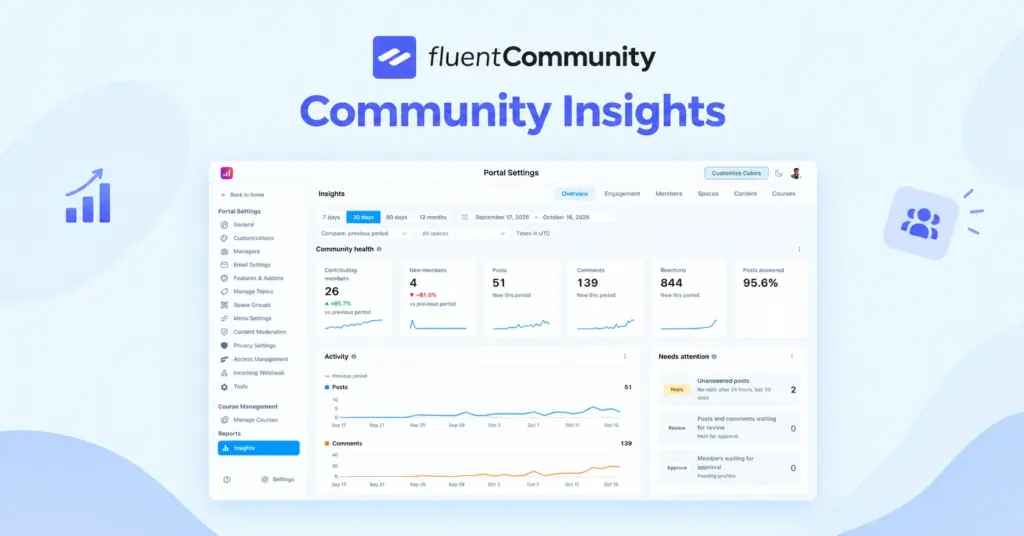
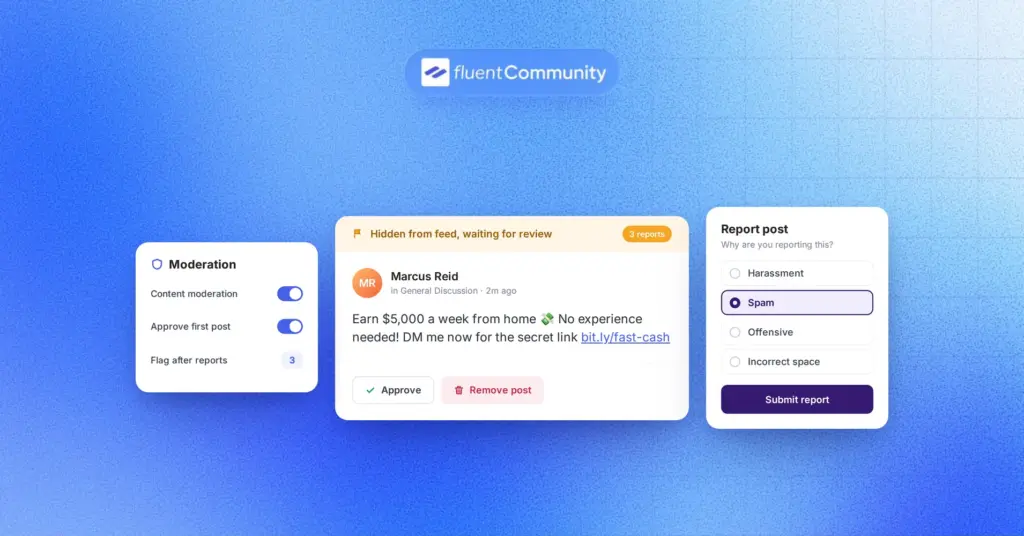
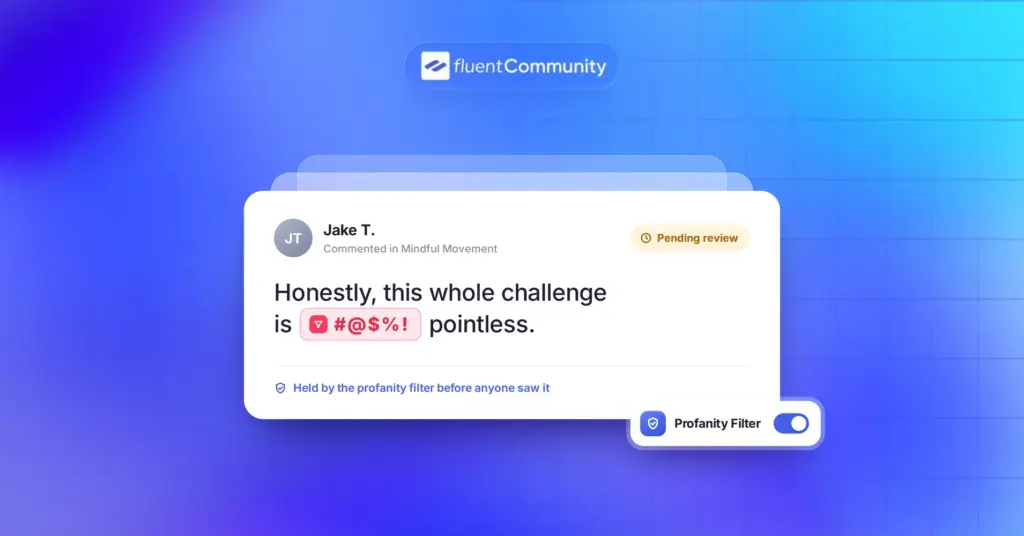
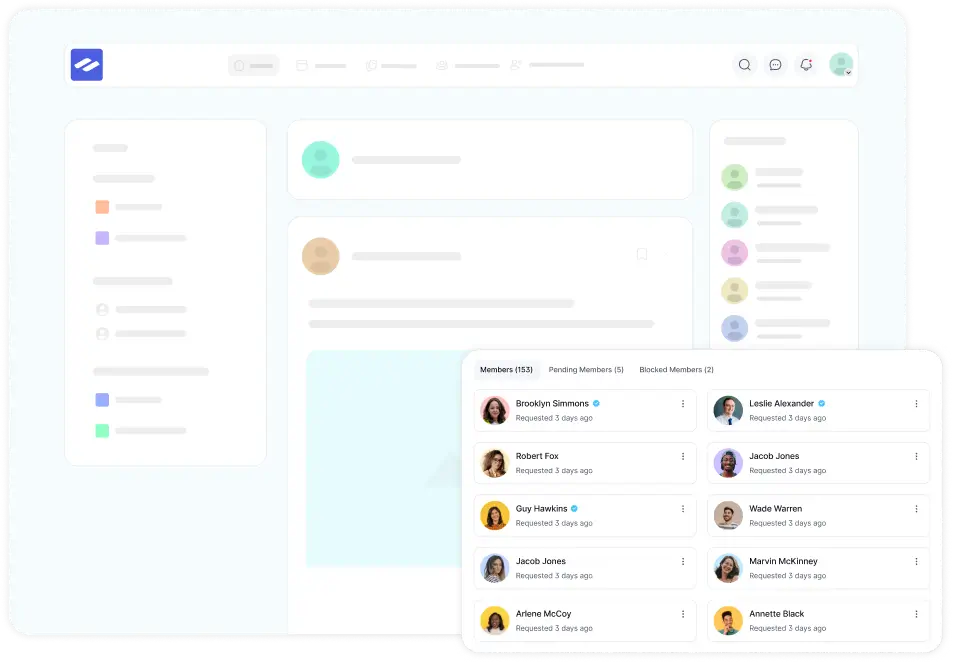
Even a support community can help. Check out how to build a support community with FluentCommunity.
No updates after launch
Some creators treat a course like a one-time project, but that’s a mistake. Tools evolve, platforms change, and best practices get updated over time. If your course stays frozen, it will slowly lose relevance and become less useful for learners. That’s why it’s important to plan for regular updates.
Even small improvements can make a big difference, such as replacing outdated screenshots, improving weak or unclear lessons, adding new FAQs, fixing confusing steps, or updating links and resources. A course should be treated as an evolving product, not a static piece of content or a scrapbook that never changes.
Pricing it badly
Price is not just math. It is positioning. How you price your course sends a message about its value. If you set the price too low, people may assume the course is shallow or not valuable enough. On the other hand, if you price it too high without enough trust, proof, or credibility, people may hesitate to buy. That’s why pricing should be thoughtful and strategic.
You need to consider the outcome you are selling, the depth of transformation your course provides, the budget of your target audience, and whether you are offering additional value like bonus support or community access. Instead of pricing based on fear or guessing, you should price based on clear value and positioning.
Launching without a plan
A lot of creators finish building their course and then simply stare at it, unsure of what to do next. The reality is that creating the course is only half the job. You also need a clear plan to get it in front of the right people. At a minimum, you should define who the course is for, where those people spend their time online, and what message will attract their attention. You also need to decide how you will reach them, whether through email, social media, ads, partnerships, or a webinar.
Finally, you should have a clear launch offer that encourages people to take action. Without a proper launch plan, even a great course can end up with no sales.
Trying to be perfect
Perfection is a very expensive way to hide. Many creators keep polishing the course because they are afraid to ship it. The longer they wait, the more likely they are to stall completely. Your first version does not need to be flawless. It needs to be helpful. Release something solid, learn from students, then improve it. That is a much better business move than sitting on a “perfect” course nobody has seen.
Not listening to student feedback
Your first draft is not the final version. Once real students start taking your course, they will naturally show you what works and what doesn’t. That feedback is incredibly valuable. If you actually pay attention to it. Instead of assuming everything is perfect, look closely at where students drop off, what questions they keep asking, which lessons feel too slow, which parts are unclear, and what results they are getting.
These patterns will tell you exactly where your course needs improvement. The best courses are not perfect from the start. They become better over time because their creators actively listen, learn, and refine based on real student experience.
Final thoughts
Making an online course is not difficult because of the tools. It becomes challenging because you have to think clearly about the student experience from start to finish. Many creators fall into common traps that weaken their course before it even launches, such as starting with content instead of outcomes, trying to teach too much, ignoring validation, making the course unnecessarily long, skipping proper structure, or delivering content in a way that is unclear, overcomplicated, or too passive.
When you avoid these mistakes and instead focus on a real learner, a real problem, and a real measurable result, your course immediately has a much stronger chance of success.

Prema Anjum
My full name is Anzuman Ara Chowdhury. But people know me as Prema Anjum. I’m a Digital Marketer by profession, a WordPress community contributor, and a travel enthusiast by heart.
![SEO Title: 5 Best Community Portal Software [WordPress + SaaS Options]](https://fluentcommunity.co/wp-content/uploads/2026/10/community-portal-software-featured-1-1024x536.webp)
Add your first comment to this post