

How to Build a Community Marketing Strategy That Works

Table of Content
Subscribe To Get
WordPress Guides, Tips, and Tutorials


Most brands today are louder than ever, yet fewer people are listening. Ads cost more each year, social reach keeps shrinking, and inboxes are already full. In the middle of all that noise, people still trust one thing above everything else, and that is other people. They trust a recommendation from someone who has used the product, a reply from a member who solved the same problem, and a space where their questions actually get answered.
That is exactly where a community marketing strategy comes in. Instead of pushing messages at an audience, you bring your customers, fans, and learners together in one place and let relationships do the heavy lifting. Over time, that space becomes a source of feedback, loyalty, referrals, and repeat sales that no ad campaign can copy.
However, a community does not grow by accident. Opening a group and hoping people will talk is not a strategy. You need a clear purpose, the right platform, an engagement plan, and a way to measure what is working. In this guide, we will walk through each of those pieces in plain language, so you can build a community that supports your business for years rather than weeks.
What Is a Community Marketing Strategy?
A community marketing strategy is a plan for growing your brand by bringing people together around a shared interest, goal, or product, and then giving them real reasons to stay. It is different from traditional marketing in one important way. Traditional marketing talks to people, while community marketing helps people talk to each other.
In practice, this means your marketing is no longer limited to what your team publishes. A member shares a win, another member asks a question, and a third jumps in with an answer. Each of those small moments builds trust in your brand without you writing a single line of copy. Your role shifts from broadcaster to host.
It also helps to separate community from audience. An audience follows you and consumes what you post. A community, on the other hand, interacts with you and with each other. You can have a hundred thousand followers and no community at all, and you can have three hundred members who drive more revenue than that entire following. So the goal here is not size. The goal is connection.
Why Community Marketing Works?
Community marketing works because it is built on trust, and trust is the hardest thing to buy. When a potential customer sees real members getting results, the proof feels honest in a way that a landing page never quite manages. As a result, the buying decision becomes easier and faster.
Beyond that, a community keeps customers around longer. People rarely leave a product when their friends, peers, and progress all live inside it. They log in for the conversation and end up staying for the product. This is why community is so closely tied to retention, and retention is usually far cheaper than finding a brand new customer.
There is also a quieter benefit that many brands overlook. A community is the best research tool you will ever have. Members tell you what confuses them, what they wish existed, and what words they use to describe their problems. That language can go straight into your blog posts, emails, and product pages. In other words, your community does not just support your marketing. It keeps improving it.
Finally, community compounds. Every helpful post, every answered question, and every member story stays there for the next person who joins. Unlike an ad that disappears when the budget ends, the value keeps building.
Start With a Clear Purpose and the Right People
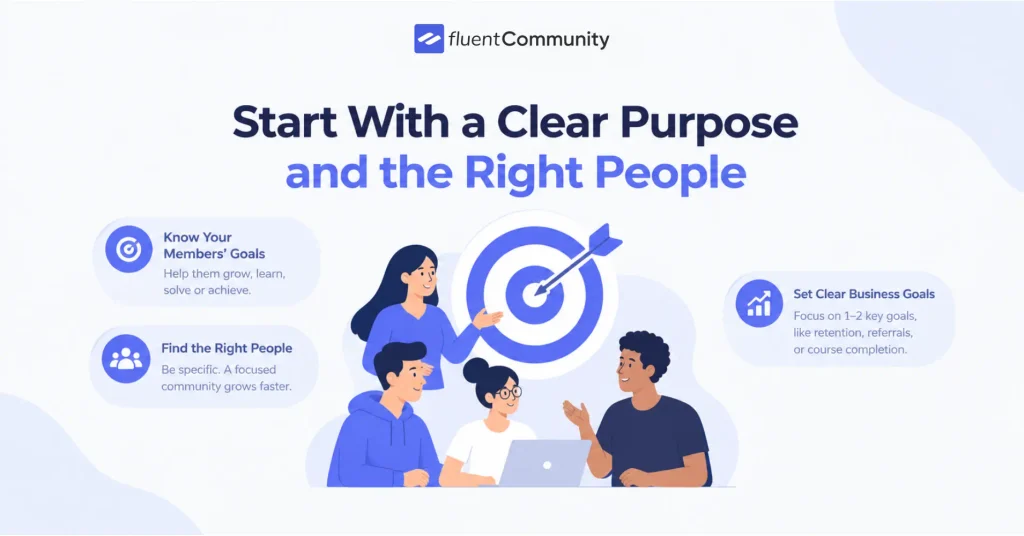
Before you choose a platform or plan a single post, you need to answer one simple question. Why would someone join this community, and why would they come back next week? If your honest answer is “to hear about our product,” the community will struggle. People join for their own goals, not yours.
So begin by defining the change your members want. Maybe they want to grow a freelance business, finish an online course, get fit, or master a tool. Your community should exist to help them get there, and your product should naturally be part of that journey. When the member’s goal and your business goal point in the same direction, everything else becomes easier.
Next, get specific about who the community is for. A space for “everyone interested in marketing” feels empty, while a space for “first-time course creators building on WordPress” feels like home to the right person. It may seem risky to narrow down, but a focused community grows faster because members instantly recognize themselves in it.
Next, set one or two business goals the community should support. It could be better retention, more referrals, fewer support tickets, or higher course completion. Keep this list short, because a community that tries to do everything usually ends up doing nothing well.
Choose a Home You Actually Own
Where your community lives shapes almost everything about it. Many brands start with a social media group because it is free and familiar. That is fine for testing an idea, but it comes with real limits. You do not control the algorithm, you cannot reach every member when you need to, and the platform can change its rules at any time. On top of that, your members are one notification away from being distracted by something else.
For that reason, more brands are moving their communities onto platforms they own. When the community lives on your own website, you keep the member data, you control the experience, and you decide how it is monetized. Your brand stays in front of members instead of sitting inside someone else’s app.
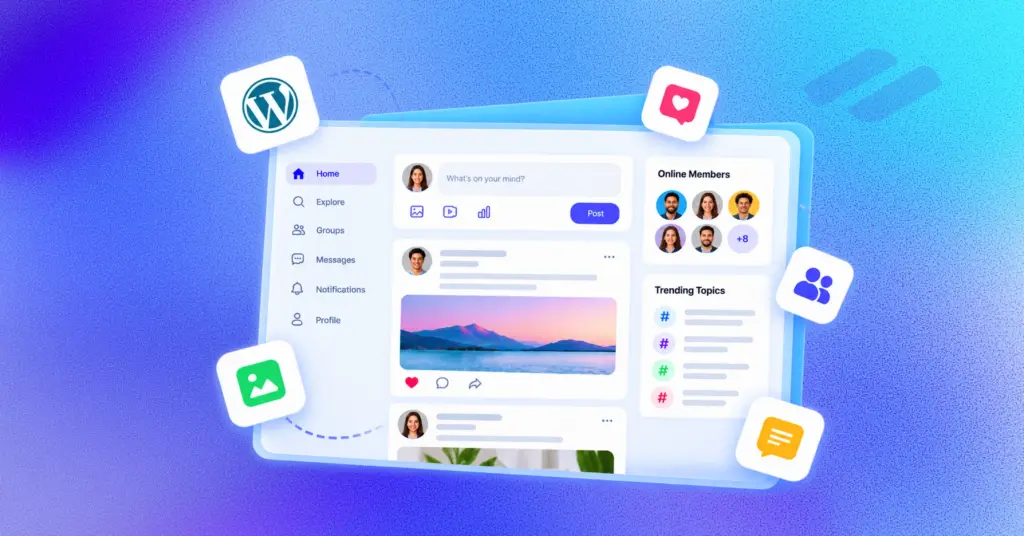
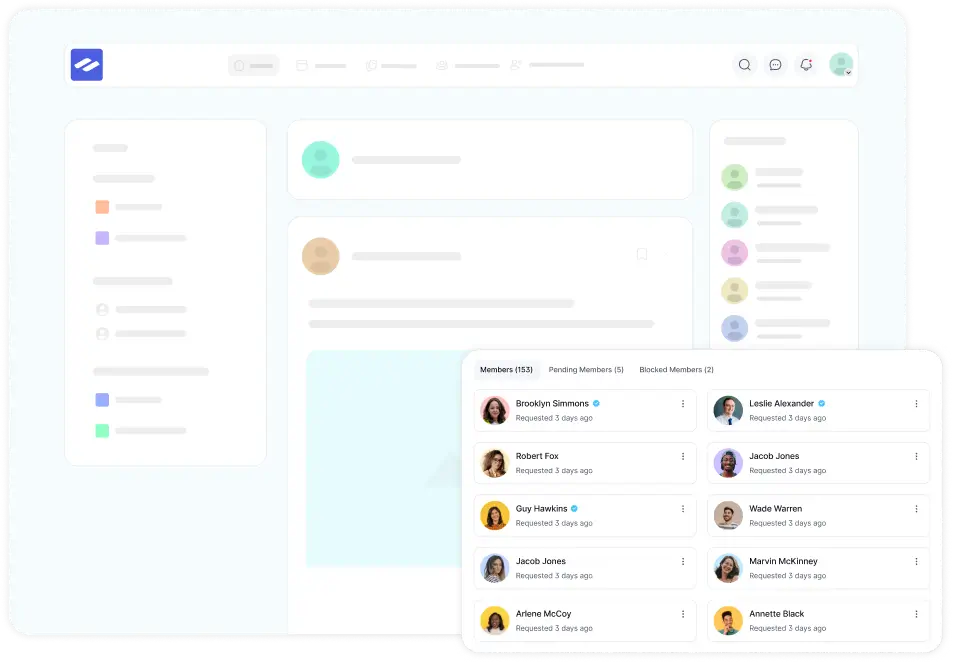
If your site runs on WordPress, a plugin like FluentCommunity lets you build that home directly on your own domain. You can organize members into spaces, run courses alongside discussions, and use features such as a leaderboard, real-time chat, and polls to keep people active, all without sending members to a third-party network. Because it sits on WordPress, it also connects naturally with the rest of your site, from your content to your checkout.
Whichever platform you choose, look for three things. It should be easy for a new member to use, it should give you full access to your own data, and it should have room to grow as your community does.
Create Engagement Loops, Not Just Content
Once your community has a home, the real work begins. A common mistake is treating the community like another content channel and filling it with announcements. Members do not come back for announcements. They come back for conversations and for progress.
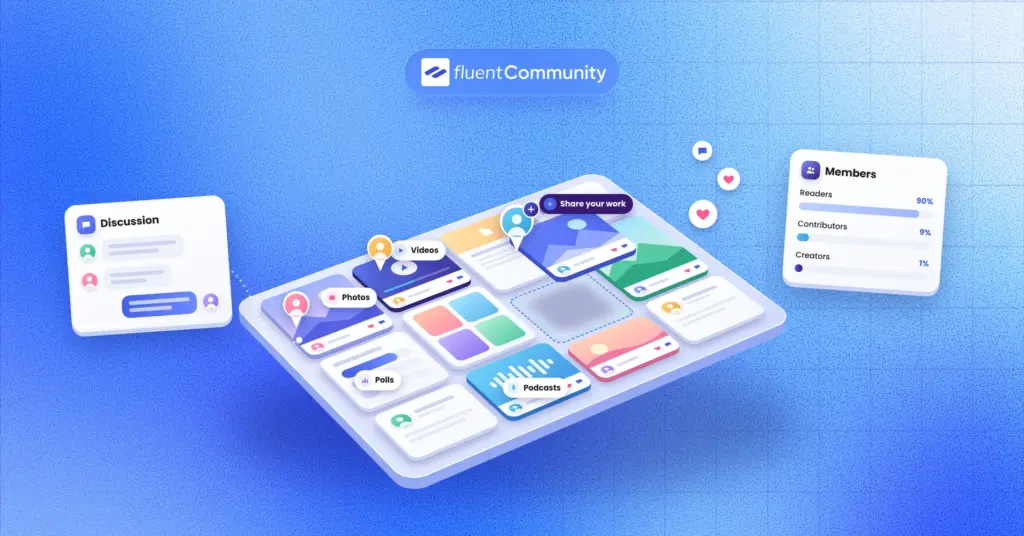
Therefore, think in terms of loops. A loop is a simple pattern that gives members a reason to show up again and again. For example, you might run a weekly question that everyone answers, a monthly challenge with a clear finish line, or a regular live session where members get direct help. When these happen on a steady schedule, members start building the community into their own routine.
Onboarding deserves special attention here. The first few days decide whether a new member becomes active or silently disappears. Welcome people by name, point them to one easy first action, and invite them to introduce themselves. A small early win makes a big difference.
Recognition is equally important. People repeat what gets noticed, so highlight helpful members, celebrate milestones, and use tools like leaderboards to make contributions visible. Meanwhile, polls and surveys give quieter members a low-effort way to take part. Step by step, you move people from reading to reacting, to posting, and eventually to leading conversations themselves.
Turn Members Into Advocates
A healthy community naturally produces advocates, and this is where community marketing starts paying off beyond its own walls. Members who feel seen and supported talk about that experience elsewhere. Your job is to make that sharing easy and rewarding.
Start by collecting member stories. When someone shares a result, ask if you can turn it into a short case study, a testimonial, or a social post. This kind of content feels real because it is real, and it often performs better than polished brand content.
Then give your most active members a bigger role. You can invite them to host a discussion, moderate a space, or test new features early. People value being trusted, and that sense of ownership makes them even more committed.
You can also add a simple referral or affiliate program so that members are rewarded when they bring others in. When this is paired with genuine enthusiasm, it becomes a steady growth channel. Still, keep the order right. Rewards should support advocacy, not replace it. If members only promote you for a commission, the trust that makes community marketing work will slowly fade.
Measure What Matters
It is tempting to judge a community by its member count, but that number on its own tells you very little. A large, silent community is not an asset. Instead, focus on signs of real activity and real business impact.
On the community side, watch how many members are active each week, how many new members post within their first few days, and how quickly questions receive an answer. These numbers show whether the space feels alive.
On the business side, compare community members with non-members. Look at whether they stay longer, buy more, finish more courses, or need less support. Even a simple comparison like this can show clearly whether your strategy is working. It also gives you solid evidence when you need to justify more time or budget for community efforts.
Above all, review these numbers on a regular schedule and adjust. If engagement drops, test a new loop. If new members are quiet, improve onboarding. A community marketing strategy is never finished, and that is perfectly normal.
Common Mistakes to Avoid
Even with a good plan, a few habits can quietly hold a community back. The first is selling too hard and too soon. If every post points to a product, members stop paying attention. Lead with value, and the sales will follow.
The second is expecting the community to run itself from day one. In the early months, you are the main source of energy. You start the conversations, reply to every post, and connect members. Only later does the community begin to carry its own momentum.
The third is building on rented land for too long. A free social group is a useful starting point, but if the community is central to your business, it deserves a home you control.
Final Thoughts
A strong community marketing strategy is not about chasing a bigger audience. It is about building deeper relationships with the people who already care, and then giving them a place to connect, learn, and grow together. When you start with a clear purpose, choose a platform you own, design simple engagement loops, and measure what truly matters, your community becomes one of the most reliable growth channels your brand can have.
If you are ready to build that space on your own WordPress site, explore FluentCommunity and start bringing your people together in a home that belongs to you. Want to build an online learning community? Learn how to create one

Prema Anjum
My full name is Anzuman Ara Chowdhury. But people know me as Prema Anjum. I’m a Digital Marketer by profession, a WordPress community contributor, and a travel enthusiast by heart.



Add your first comment to this post