

What Is Community Marketing? A Practical Growth Playbook

Table of Content
Subscribe To Get
WordPress Guides, Tips, and Tutorials


This number should bother every marketer. The average Facebook Page post reaches about 1.8% of its followers.
That’s not a content problem. It’s a rented-land problem.
Community marketing fixes it by earning trust where people gather, then giving them a home you own.
Below: the strategy, the metrics, and a 7-step launch plan.
Key Takeaways
- Community marketing grows a brand through trusted peer conversations, not interruption
- It works in two arenas: communities you join and a community you own
- Members climb a simple ladder from lurker to asker, helper, and champion
- Connecting community data to your CRM makes revenue impact provable
- Start small with one clear job, a few spaces, and a weekly rhythm
Key Takeaways
Here’s what you’ll take away from this guide:
- Community marketing grows a brand through trusted peer conversations, not interruption
- It works in two arenas: communities you join and a community you own
- Members climb a simple ladder from lurker to asker, helper, and champion
- Connecting community data to your CRM makes revenue impact provable
- Start small with one clear job, a few spaces, and a weekly rhythm
What Community Marketing Actually Means
Community marketing is a growth strategy where a brand earns trust by helping people with a shared interest connect, learn, and solve problems together. It happens in spaces the brand owns and in communities that already exist. Sales follow from relationships and peer recommendations, not ads.
In simple terms, you stop shouting at a crowd and start hosting a conversation. Picture a neighborhood bike shop that runs free Saturday repair clinics. Nobody feels sold to. But guess where everyone buys their next bike?
The keyword is “with.” Traditional marketing talks to people. Community marketing creates a place where people talk with each other, and your brand becomes the helpful host in the middle.
Community Marketing vs. Social Media Marketing vs. Community Building
These three terms get mixed up a lot, so here’s how they compare side by side:
| Social Media Marketing | Community Building | Community Marketing | |
| Main goal | Reach and visibility | Belonging | Business growth through belonging |
| Conversation flow | Brand to audience | Member to member | Member to member, guided by a business goal |
| Who owns the relationship | The platform | Usually the organizer | Ideally you, on your own site |
| Typical metric | Followers and impressions | Active members | Retention, referrals, revenue influenced |
Community building is the craft. Community marketing is what happens when you point that craft at a business goal. Honestly, you need both, and the rest of this guide shows how they fit.
Why Community Marketing Works Better Now Than It Used To
Community has always mattered. What changed is the math around every other channel. Three shifts made community marketing a smart bet instead of a side project.
People Trust People More Than Ads
In Nielsen’s U.S. Trust in Advertising study, recommendations from people we know ranked as the most trusted channel at 89%. They were also almost twice as likely to drive action as other channels.
A community is basically a system for producing those recommendations at scale. Every helpful reply from a real customer does a job your ad copy simply can’t.
Rented Reach Keeps Shrinking While Ads Get Pricier
Organic reach on Facebook Pages averaged just 1.80% by mid-2026, according to Socialinsider’s reach benchmarks. On the paid side, WordStream’s 2025 Google Ads benchmarks found cost per click went up in 87% of industries.
So you pay more to reach people, and you reach fewer when you don’t pay. That’s the clearest argument for owning a direct line to your audience.
AI Search Learns From Real Conversations
Semrush analyzed 248,000 Reddit posts cited by Google AI Mode, Perplexity, and ChatGPT search. Most cited posts had fewer than 20 upvotes and 20 comments. AI tools favored specific, helpful answers over viral ones.
That’s good news for smaller brands. You don’t need a huge following to show up in AI answers. You need clear, honest Q&A, which is exactly what a healthy community produces every week.
The Two Arenas of Community Marketing: Out There and In Here
Here’s where most guides pick a side. Some say build your own community. Others say skip the hassle and engage existing ones. In practice, the brands that grow do both, and they connect the two on purpose.
Arena 1: Show Up Where Your People Already Gather
Your future customers are already talking somewhere. It might be a subreddit, a Facebook group, a Slack workspace, a local meetup, or a WordCamp hallway. Your job there is simple: be the most useful person in the room.
These rules of thumb keep you welcome in borrowed communities:
- Read the group rules and lurk for a week before posting
- Answer the question asked, not the one you wish they asked
- Share links only when they truly solve the problem
- Say you work for the brand, every single time
- Track which threads send people back to your site
Arena 2: Build a Home You Own
Borrowed spaces are great for discovery, but you don’t control them. The algorithm can change overnight. A group admin can ban links. And you can’t easily connect that activity to your email list or CRM.
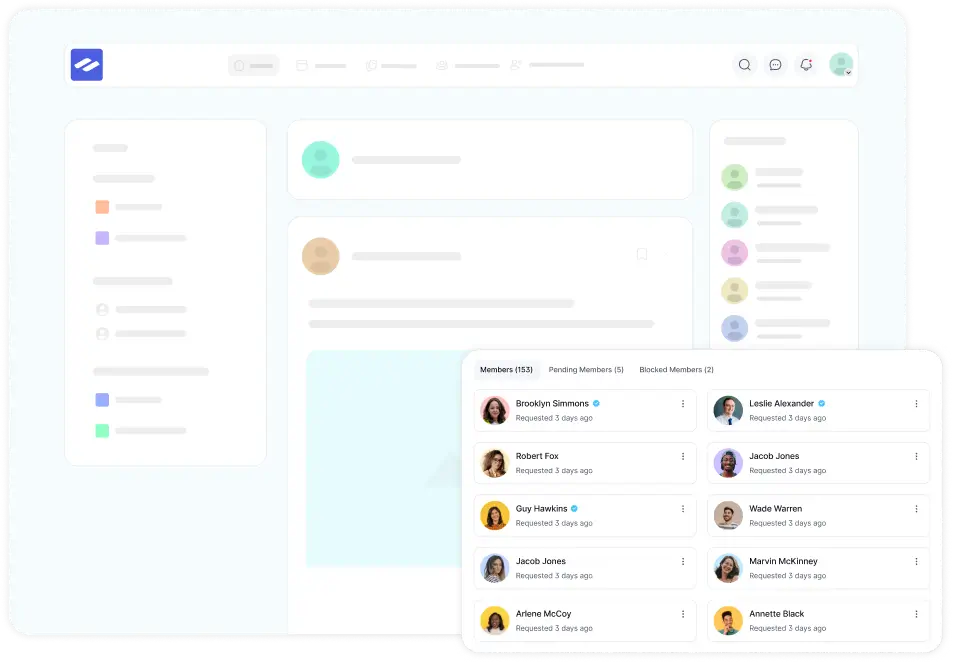
An owned community fixes this. It lives on your domain, under your brand, with member data you control. For WordPress sites, FluentCommunity handles this as a plugin. Your spaces, courses, and member profiles live inside your own site instead of a third-party app.
If you’re new to the owned side, our Online Community 101 guide covers the basics of how online communities are structured.
How the Two Arenas Feed Each Other
The real growth comes from the loop between both arenas. It runs in this order:
- You answer questions helpfully in outside communities
- Some people follow you back for deeper help, templates, or courses
- Inside your community, members ask, answer, and share wins
- The best threads become public guides, FAQs, and case studies
- That content gets found in search and shared back into outside communities
Each lap makes the next one easier. That’s the flywheel, minus the jargon. Here’s how the two arenas compare:
| Out There (Borrowed) | In Here (Owned) | |
| Best for | Discovery and first impressions | Retention, advocacy, and revenue |
| You control | Your own replies | Rules, data, design, and access |
| Main risk | Rule or algorithm changes | Launching to an empty room |
| What to measure | Referral visits and mentions | Active members and conversions |
The Community Marketing Ladder: From Lurker to Champion
Nobody becomes your biggest fan on day one. Most people climb slowly, one rung at a time. Your job is to make the next step feel small, safe, and worth it.
Here’s what each rung looks like and how to help members climb it:
| Rung | What They Do | What They Need From You | Helpful FluentCommunity Tools |
| Lurker | Reads, never posts | A reason to stay and an easy first action | Welcome banner, polls, an intro space |
| Asker | Posts questions | Fast, friendly answers | Topics, mentions, notifications |
| Helper | Answers other members | Visible recognition | Leaderboard, user badges |
| Champion | Recommends you and invites friends | Access, status, and a voice in decisions | Private spaces, badges, early access |
Recognition matters more than swag. In the 2025 CMX Community Industry Trends Report, 67% of community teams reward contributors with public recognition and 39% use digital badges. Only 11% pay cash.
Here’s a practical move. When a member reaches a new leaderboard level, send a thank-you email and award a badge automatically. With the FluentCRM integration, “User Level (Leaderboard) Upgraded” is a built-in trigger and “Add Badge To User” is a built-in action.
How to Build a Community Marketing Strategy in 7 Steps
Below is the launch sequence for a brand starting from zero. Order matters here, so work through it top to bottom.
1. Give Your Community One Clear Job
A community that tries to do everything ends up doing nothing well. CMX groups community value into six jobs: support, customer success, product feedback, acquisition, content creation, and engagement or retention.
Support (24%), customer success (22%), acquisition (20%), and retention (19%) were the most common top objectives in CMX’s 2025 data. Pick the one that hurts most right now. A course creator with high refunds might choose success. A store with weak repeat sales might choose retention.
2. Map Where Your People Already Talk
Spend one week listening before you build anything. Search Reddit, Facebook groups, YouTube comments, and niche forums for your topic. Write down the top questions, the exact words people use, and the people others trust.
This list pays off later. Top questions become your first community posts. Trusted voices become your first invitations. And the phrases people use become your SEO keywords.
3. Design a Simple Home Base
Start with three to five spaces, not twenty. Empty rooms feel awkward, and too many choices make new members freeze. Add spaces only when conversations outgrow the ones you have.
Here’s a real example. The WPManageNinja Community runs on FluentCommunity. It keeps one discussion space per product plus a “Say Hello” space for newcomers. It also links to public roadmaps where users add ideas and react to what’s coming next.
A starter structure that works for most brands looks like this:
- Start Here, for introductions
- Questions and Help, for peer support
- Wins and Showcase, for member results
- Announcements, for news and live sessions
- One topic space tied to your community’s main job
4. Seed It Before You Open the Doors
Nobody wants to be the first person at a party. A good rule of thumb: invite 20 to 50 founding members personally before launch. Think loyal customers, early students, or helpful people you met during your listening week.
Ask each founder for one small favor, like posting an introduction or answering one question. FluentCommunity lets you set spaces as public, private, or secret, and you can invite members directly or approve join requests. That makes a quiet soft launch easy.
5. Set a Weekly Rhythm Members Can Count On
Communities run on habits. When people know Wednesday means a live Q&A and Friday means wins, they come back without being nagged.
A simple weekly rhythm to start with:
- Monday: a “what are you working on?” thread
- Wednesday: a live Q&A or office hours session
- Friday: a wins and showcase thread
- Monthly: a poll asking members what they want next
Don’t guess the timing. FluentCommunity’s analytics include a popular day and time heatmap, so you can schedule live sessions when members actually show up. Email digests help pull quiet members back in between sessions.
6. Wire Your Community to Your Marketing Stack
This step separates community marketing from a nice hobby. CMX found that teams with CRM-connected community data were about twice as likely to rate their community “extremely successful,” 24% versus 11%.
When your community and your email list talk to each other, you can welcome, nurture, and segment people based on what they actually do. With FluentCommunity and FluentCRM on the same WordPress site, you get triggers like “Joined in a Space,” “Enrolled in a Course,” and “Left from a Space.”
A few automations worth building first:
- New space members get a short welcome email sequence
- Course enrollees get a friendly check-in after a few quiet days
- Customers tagged after purchase get added to a customers-only space
- Members who level up get a thank-you email and a badge
7. Turn Member Conversations Into Content and Search Visibility
Your members ask the same questions your prospects type into Google and ChatGPT. Treat every great thread as a draft. Turn it into a blog post, a FAQ entry, a short video, or a case study, with the member’s permission.
Then decide what should be public. FluentCommunity generates an XML sitemap for your portal, but it only works when portal access is set to Everyone. Content you keep private won’t be crawled.
A smart split: keep beginner Q&A public to attract searchers. Keep deep-dive spaces, courses, and member wins private as a reason to join.
Community Marketing Playbooks for Different Businesses
The core strategy stays the same for everyone. What changes is the job your community does and the first win you chase.
Ecommerce and DTC Brands
Your community’s job is usually retention and user-generated content. Think styling tips for a clothing brand, recipe swaps for a cookware store, or desk setup photos for a gadget shop.
Run monthly challenges like “show us how you wear it,” feature member photos in your emails, and give top contributors early access to new drops. Glossier famously shaped early products from reader comments on its sister blog, Into The Gloss.
Course Creators and Coaches
Here the job is student success, because successful students renew, refer, and leave reviews. Put a discussion under every lesson and run weekly office hours.
FluentCommunity puts community spaces and courses in one place, with lesson discussions and progress tracking. Questions happen right next to the lesson, instead of in a separate Facebook group nobody checks.
Agencies and Freelancers
Your community can work as a lead engine. Host a free space for your niche, like local restaurant owners learning WordPress, and answer questions generously. Clients who watch you solve problems in public don’t need a cold pitch.
You can also offer a private client space as a value add. It cuts down repeat support emails and makes your retainers feel bigger.
SaaS and Software Products
Product feedback and support deflection are the big wins here. Members answer each other, and your team learns what to build next.
Public roadmaps and feature request threads give users a real voice. Figma’s Community, where users publish and remix files and plugins, shows how member contributions can become a growth channel of their own.
Nonprofits, Clubs, and Associations
For mission-driven groups, community is the product. People join for connection and stay for belonging. Use spaces for chapters, committees, or regions, and give volunteers visible recognition.
Paid membership can fund the mission too. FluentCommunity supports paid spaces and courses through FluentCart or Paymattic, including recurring payments. See how it works for nonprofits and for clubs and associations.
How to Measure Community Marketing ROI Without Guessing
Here’s the uncomfortable truth. In CMX’s 2025 report, only 24% of community pros said they could confidently put a dollar value on their community. Most were still working on it.
The fix isn’t fancier math. It’s picking a few numbers tied to your community’s one job and tracking them every month.
A Simple Community Marketing Scorecard
Match your community’s job to one health signal and one business metric:
| Community Job | Health Signal | Business Metric |
| Support | Share of questions answered by members | Fewer support tickets |
| Customer success | Active members, course completion | Renewals and refunds avoided |
| Acquisition | New members from referrals or search | New leads and customers |
| Retention | Repeat monthly activity | Repeat purchase rate, churn |
| Content | Member posts and showcases | Content published, search traffic |
| Product feedback | Ideas and poll responses | Features shipped from member ideas |
Active members beat total members every time. CMX found 84% of community teams track active members as a health metric. A thousand silent sign-ups won’t grow anything.
Where to Find These Numbers in FluentCommunity
The FluentCommunity Analytics dashboard covers most health signals across three tabs:
- Overview: growth lines for members, posts, comments, and spaces, plus an activity heatmap
- Members: total, active, new, and pending members, plus top members and top commenters
- Spaces: posts, comments, and members per space, ranked by activity
Pair those numbers with your CRM and store data for the business side of the scorecard.
A Back-of-the-Napkin ROI Formula
Community ROI = (value created minus cost to run) divided by cost to run.
Value created usually comes from three buckets: support costs saved, revenue you can trace to members, and retention gains. For example, if members answer 100 questions a month that would have been $5 support tickets, that’s $500 a month saved before a single sale. (Illustrative numbers only. Use your own.)
Community Marketing Mistakes to Avoid
Most failed communities don’t fail because of the idea. They fail because of a few predictable traps.
Opening an Empty Room
Launching publicly with zero activity tells visitors nothing happens here. Seed your founding members first, and post a few real conversations before you announce anything.
Treating the Community Like an Ad Channel
If every post is a promo, members leave. Keep most content about their problems and their wins. Save announcements for a dedicated space so they don’t crowd the conversation.
Counting Members Instead of Conversations
Sign-ups feel good on a chart. But a community with 300 active members beats one with 3,000 silent ones. Report active members and replies, not just totals.
Making Everything Private, or Everything Public
All private means search engines never find you. All public means there’s no reason to join. Split it: public help for discovery, private depth for members.
Building It All on One Person
CMX found 17% of community teams have no one working on community full time. Lean is normal. So share the load. In CMX’s data, 41% of teams now co-manage forums with members, and FluentCommunity’s role manager lets you hand trusted members moderation duties.
Renting Forever
A Facebook group is a fine place to start, but it’s not yours. Use borrowed communities for discovery, then invite your most engaged people into a home you own.
Where FluentCommunity Fits in a Community Marketing Plan
If your website runs on WordPress, you don’t need to send members to a separate SaaS app to build your home base. Here’s how FluentCommunity maps to the marketing jobs in this guide:
| Marketing Job | FluentCommunity Feature |
| Onboard new members | Welcome banner, welcome message, intro space |
| Spark conversation | Spaces, posts, polls, mentions, hashtags |
| Reward helpers | Leaderboard and user badges |
| Re-engage quiet members | Email digests and notifications |
| Educate and convert | Courses with lesson discussions and quizzes |
| Monetize | Paid spaces and courses via FluentCart or Paymattic |
| Automate and segment | FluentCRM triggers and actions |
| Moderate | Content moderation, user approval, role manager |
| Measure | Analytics dashboard |
There’s a free version on WordPress.org to test the basics, and a Pro version with advanced modules. The Free vs Pro comparison shows what’s in each.
Start Small, Then Let Your Members Carry It
You don’t need a big budget or a huge audience to start community marketing. You need one clear job, a few useful spaces, and the patience to show up every week.
Help people in the groups they already use. Invite the most engaged ones into a home you own. Then reward the helpers, connect the data, and turn great threads into content.
If your site runs on WordPress, FluentCommunity gives you that home base on your own domain. You get spaces, courses, leaderboards, analytics, and FluentCRM automations in one place.
Start with the free plugin to test your structure, or explore every FluentCommunity feature to plan your launch. Your future champions are already out there asking questions. Go answer one today.
Frequently Asked Questions About Community Marketing
What Is Community Marketing in Simple Words?
Community marketing means growing your business by bringing people with a shared interest together and helping them help each other. Your brand acts as the host. Trust, word of mouth, and loyalty do the selling.
Is Community Marketing the Same as Social Media Marketing?
No. Social media marketing pushes content to followers on platforms you don’t own. Community marketing creates two-way, member-to-member conversations. Social media can feed a community, but it doesn’t replace one.
What Are Some Examples of Community Marketing?
Common examples include customer forums, student communities inside online courses, ambassador programs, local meetups, and brand challenges. Glossier shaping products from blog comments and Figma’s user-built file library are well-known cases.
Do I Need My Own Platform for Community Marketing?
Not at first. You can start by helping people in existing groups. But an owned community gives you control over data, rules, and access, and it lets you connect activity to your email marketing and CRM.
How Do You Measure Community Marketing Success?
Track one health signal and one business metric tied to your community’s main job. Active members, questions answered by peers, retention, and referrals are the most useful starting points.
Can Small Businesses Do Community Marketing?
Yes. In CMX’s 2025 report, 36% of respondents worked at companies earning under $1 million a year. Small teams win by starting narrow, staying consistent, and letting members share the work.
How Much Does Community Marketing Cost?
The biggest cost is time: hosting, answering, and planning. Tool costs vary widely. A WordPress plugin on your existing site usually costs far less than enterprise community software, but check current pricing for any tool you consider.

Ashik Elahi
Ashik Elahi is a seasoned Digital Marketing Strategist with a passion for Content Marketing. He believes in the power of storytelling and crafting valuable content that resonates with readers.
Add your first comment to this post