

How to Choose the Best LMS for Your Online Courses

Table of Content
Subscribe To Get
WordPress Guides, Tips, and Tutorials


Choosing the right Learning Management System (LMS) can define the success of your online course business. It’s not just about picking software; it’s about shaping how your students learn, engage, and stay connected with your content. The LMS you choose influences everything from user experience to revenue growth and long-term scalability.
With so many LMS platforms available today, all claiming to be the “best,” it’s natural to feel confused or overwhelmed. But the reality is simple: there’s no one-size-fits-all solution. What works perfectly for one creator or business may not work for another.
The key is finding an LMS that aligns with your goals, supports your audience, and grows with your vision. In this guide, you’ll discover a clear, step-by-step approach to choosing the best LMS for your online courses without confusion or guesswork.
What is an LMS, and why does it matter?
A Learning Management System (LMS) is software that helps you create, manage, deliver, and track online courses. It acts as the foundation of your entire online education business. From hosting videos and quizzes to tracking student progress and processing payments, everything runs through your LMS.
Choosing the wrong LMS can lead to:
- Poor student experience
- Low course completion rates
- Technical headaches
- Expensive migrations later
In fact, many organizations stay with the same LMS for 5–10 years, making it a long-term decision.
Select the Best LMS for Your Online Course
Selecting the best LMS for your online course is one of the most important decisions you’ll make as a creator or educator. The right platform doesn’t just host your content; it shapes how your students learn, interact, and stay engaged throughout the journey. With so many options available, it’s easy to get distracted by features and pricing.
But the real focus should be on finding a solution that aligns with your goals and audience needs. A well-chosen LMS simplifies your workflow, improves learner experience, and sets the foundation for long-term growth and success in your online course business.
Step 1: Define Your Goals First
Before comparing tools, start with clarity. Ask yourself what you’re really trying to achieve—are you selling courses or offering free education? Is your focus on building a community, issuing certifications, or simply delivering content? Do you want to generate passive income, or are you planning to run active coaching programs? Your LMS should align with your business model, not the other way around.
For example, coaches typically need strong community features and interaction, while course creators focus more on content delivery and payment systems. Businesses, on the other hand, often require detailed reporting and employee tracking. Without clear goals, it’s easy to get distracted by features that look impressive but don’t actually serve your needs.
Step 2: Understand Your Audience
Your learners should be at the center of your LMS decision. Think about who they are and what they need? Are they beginners or advanced learners? Do they prefer learning on mobile devices? Will they require certifications? Are they comfortable with technology, or do they need a simple, guided experience?
These questions matter because a complicated LMS can quickly reduce engagement. In fact, ease of use is one of the most critical factors to consider. If learners struggle to navigate the platform, they’re far more likely to lose interest and stop using it altogether.
Step 3: Look for Essential LMS Features
Not all LMS platforms are created equal. Some are packed with features but can feel overwhelming, while others are simple yet limited. That’s why it’s important to evaluate the core features that truly matter for your goals. Course Creation & Content Management should be your starting point, ensuring you can upload videos, PDFs, and quizzes, create structured lessons and modules, and organize everything easily. These are the foundations of any LMS.
Next, Student Progress Tracking is essential for improving your courses over time, so look for completion tracking, progress dashboards, and detailed reports and analytics to measure success and refine learning outcomes.
If you’re teaching seriously, Assessments & Certifications become important, including quizzes, exams, automated grading, and certificates, which help boost both credibility and engagement. Modern platforms also go beyond content with Community & Engagement Tools like discussion forums, comments, and leaderboards or gamification, all of which enhance participation and retention. Since many learners access content on their phones, Mobile Friendliness is critical. Your LMS should offer a responsive design and, ideally, app support.
Another key factor is Integrations, allowing your LMS to connect with payment gateways, email marketing tools, and CRM systems, giving you flexibility in how you run your business. For a more polished and professional presence, Customization & Branding options like white-labeling, custom domains, and brand-specific colors and logos are highly valuable. Finally, if you plan to sell courses, Monetization Features such as one-time payments, subscriptions, and coupons are essential to support your revenue model.
Step 4: Prioritize User Experience (UX)
A powerful LMS is useless if it’s difficult to use. No matter how many features a platform offers, it won’t deliver results if learners struggle to navigate it. A good LMS should be intuitive, load quickly, and require minimal training so users can get started without confusion.
User experience plays a direct role in course completion and engagement. When the platform feels simple and smooth, learners are far more likely to stay and finish what they started. A quick way to evaluate this is with a simple test: can a complete beginner find and start a course within one to two minutes? If not, that’s a clear red flag.
Step 5: Consider Scalability
Your LMS should be able to grow alongside your business, not hold it back as you expand. Think ahead and ask whether it can handle an increase from 10 to 10,000 students without breaking down, whether you can add new courses easily as your content library grows, and whether the platform maintains stable performance under heavier usage. These factors matter because scalability isn’t just a bonus. It’s essential for long-term success.
Step 6: Evaluate Pricing Carefully
Pricing isn’t just about the monthly cost. It’s about the full picture. You need to consider factors like setup fees, transaction fees, paid add-ons, and any hidden costs that may appear as you scale. What looks affordable at the beginning can quickly become expensive if the platform limits your growth or requires extra payments for essential features.
Step 7: Check Support & Reliability
Even the best tools can run into issues, which is why reliable support is so important. When choosing an LMS, look for features like 24/7 customer support, well-organized documentation, and an active user community where you can find answers and share experiences. Having access to strong support can save you significant time and frustration, especially when you need quick solutions to keep your courses running smoothly.
Step 8: Compare LMS Types
There are different types of LMS platforms, and choosing the right one depends on your needs and technical comfort level. Hosted LMS (SaaS) platforms, such as Teachable and Thinkific, are easy to use and require no technical setup, but they often come with limited customization options.
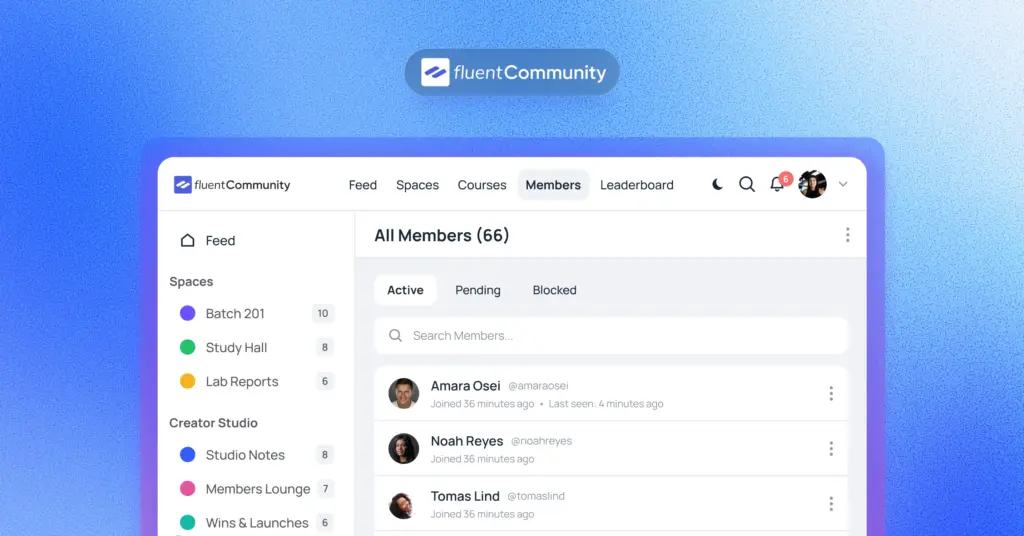
On the other hand, Self-Hosted LMS (WordPress-based) solutions like FluentCommunity give you full control and high flexibility, though they do require some initial setup and management.
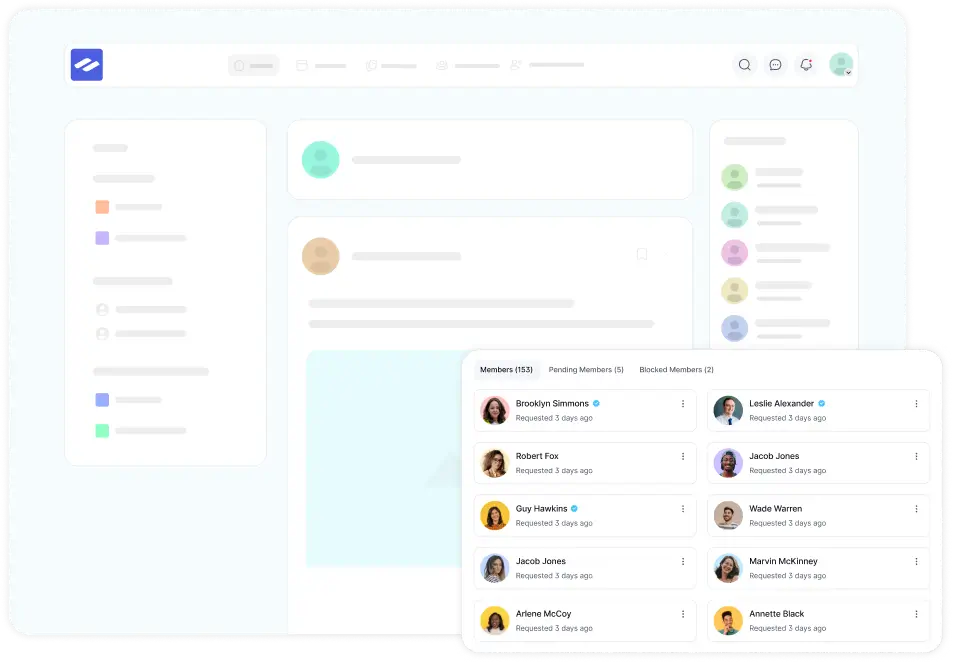
FluentCommunity is a complete community platform designed for businesses. Download now to create and manage your community.
Then there are All-in-One Platforms, which combine courses, community, and monetization features in a single system, making them ideal for creators who want everything in one place, with FluentCommunity being a strong example. Ultimately, the best choice comes down to how comfortable you are with technology and what your business truly needs to grow.
Step 9: Test Before You Decide
Never choose an LMS without testing it first. Most platforms offer free trials or demo versions, and taking advantage of these can save you from making the wrong decision. During the testing phase, pay close attention to how easy it is to create a course, what the student experience feels like, and how intuitive the dashboard is to use. These hands-on insights will give you a much clearer picture than any feature list.
Step 10: Avoid Common Mistakes
Many creators make common mistakes when choosing an LMS, often starting with selecting a platform based only on its features. A long feature list might look impressive, but it doesn’t guarantee better results. Another major issue is ignoring user experience. If the platform feels confusing or difficult to navigate, learners are likely to lose interest and drop off. Some also fail to plan for growth, not realizing that switching an LMS later can be both costly and time-consuming.
On top of that, overpaying for unused features is a frequent problem; it’s always smarter to invest in what you truly need rather than what simply looks powerful. From real-world community discussions, one insight stands out clearly: there’s no universal “best” LMS. It’s all about finding the right fit.
Many experienced users consistently emphasize the importance of ease of use over a long list of features, along with choosing a platform that can scale over time and aligns with how people actually learn.
Final Thoughts
Choosing the best LMS for your online courses isn’t about picking the most popular platform. It’s about finding the one that fits your goals, your audience, and your long-term growth plan. A great LMS should make your workflow easier, not more complicated, while also enhancing the student experience and supporting your ability to scale your business over time.
Instead of rushing into a decision, take the time to explore and test your options carefully, and choose based on what you genuinely need, not what’s trending or overhyped.

Prema Anjum
My full name is Anzuman Ara Chowdhury. But people know me as Prema Anjum. I’m a Digital Marketer by profession, a WordPress community contributor, and a travel enthusiast by heart.

Add your first comment to this post