

Community-Led Growth for WordPress Product Companies: The Playbook

Table of Content
Subscribe To Get
WordPress Guides, Tips, and Tutorials


Most WordPress plugin companies follow the same playbook. Build a product, run Google Ads, write SEO articles, push a Black Friday deal. Rinse, repeat. It works until it doesn’t. Ad costs climb. SEO gets crowded. Your Black Friday discount trains customers to wait. And every time you need more revenue, you need more spending. Community-led growth is a different bet.
Instead of spending to acquire users, you build an environment where your existing users bring in new ones. Word of mouth, but with structure behind it. This article breaks down what community-led growth actually means for WordPress companies, what it looks like in practice, and how to build it without starting from scratch.
What Community-Led Growth Actually Is?
Community-led growth (CLG) is a go-to-market motion where your user community drives acquisition, retention, and expansion. Your users become the channel. It’s not the same as having a Facebook group or a Discord server. Those are containers. Community-led growth happens when users are regularly solving each other’s problems, sharing what they built with your product, recommending it to others, and staying because of the people, not just the features.
The difference matters. A support forum is reactive. A community that drives growth is proactive. Users aren’t just consuming answers, they’re creating value for each other.
Why WordPress Companies Are Built for This?
The WordPress ecosystem has some structural advantages that make community-led growth more attainable here than in most SaaS categories. Users already talk to each other.
WordPress has a 20-year history of forums, Facebook groups, Slack channels, and local meetups. Your users are already in conversations with other WordPress users. The habit of asking and helping exists. You don’t have to create it. The problems are shared. A freelancer building contact forms for clients has the same headaches as an agency managing 50 client sites.
When one person solves a problem publicly, dozens of others benefit from that solution. This creates a natural incentive to share. The builder’s identity is real. WordPress users often identify as builders. They share what they create. A developer who built a complex workflow with your plugin has a reason to post about it. It shows off their work. That post brings in three more customers.
Switching costs favor retention through community. Once someone has invested in learning your product, built integrations, and has friends who use the same tools, they stay. Community adds another layer of switching cost that doesn’t require lock-in tactics.
The Three Loops That Drive CLG
Community-led growth works through three reinforcing loops. Understanding them helps you decide where to invest.
Loop 1: The Help Loop
Users ask questions. Other users answer. New users find those answers through search and join because the community looks active and helpful. This is the most common loop and the easiest to start. Every answered question is a piece of content that brings in future users with the same problem. Stack Overflow built an empire on this. For WordPress plugins, this means your community forum or Discord channel isn’t just a support cost. It’s an acquisition channel. Google indexes every public, well-answered thread. Every thread where a user helps another user without your team being involved is an efficiency gain.
Loop 2: The Showcase Loop
Users build something with your product. They share it publicly. Others see what’s possible and want to do the same. This loop requires users who are confident enough to share their work and a community that responds positively when they do. It’s slower to start but compounds harder.
One impressive post showing what someone built can convert dozens of readers into paying customers faster than any ad. The showcase loop explains why Fluent Forms case studies consistently outperform comparison articles in conversion. Someone reading “here’s what a real agency built for their client” is closer to a buying decision than someone reading “Fluent Forms vs WP Forms.”
Loop 3: The Advocacy Loop
Users recommend your product to their network. Not because you asked them to, but because they genuinely want the people they know to use the same tools. This is the hardest loop to engineer, but the most valuable. It’s also the one most dependent on product quality. You can’t build advocacy on a mediocre product with good community management.
But you can accelerate natural advocacy by making it easy to share, by recognizing the users who do, and by giving advocates early access and input into the roadmap.
What Community-Led Growth Looks Like for a WordPress Plugin Company?
A user posts a question in your community. Three power users answer before your support team sees it. The original poster marked it solved. You pin the thread. Six months later, 200 people have found that thread through Google.
A developer builds a complex integration using your plugin. They post about it in the community. You feature it in your newsletter. They get visibility. You get a case study. Their followers check out the product. A user refers a colleague. They don’t use a referral link. They just message their contact and say, “We use this for all our client sites, you should too.” The colleague signs up. That user never asks for anything in return.
They just want their friend to have the same tool they trust. None of this required an ad budget. All of it required a functioning community and a product worth talking about.
How to Build a Community-Led Growth?
Most WordPress companies don’t start community-led growth from day one. They have existing users, an existing support model, and usually some version of a public forum or social group already. The question is how to shift from a passive community (a support container) to an active community (a growth engine).
Step 1: Find Your Power Users
Every plugin company has them. These are the users who have been with you for years, post in your forums, answer other people’s questions, and buy every add-on you release. They are your community in embryonic form.
Find them by looking at who answers support tickets publicly before your team does, who posts in your Facebook group or Discord most frequently, and who has been a customer for the longest. These users become your founding community. Give them a name, give them a channel, and treat them differently.
Not with discounts, but with access. Early feature access, direct line to the product team, and a place to give feedback that you actually act on.
Step 2: Create Reasons to Participate
Most communities fail because there’s no reason to show up after your immediate problem is solved. You need recurring reasons to engage. For WordPress plugin companies, this typically means:
- Regular “what are you building” threads that give users a reason to share their work
- Changelog posts where users can comment and shape the roadmap
- Challenges or prompts (“share your best form this month”)
- Public recognition for helpful members
The goal is to turn the community from a support destination into a professional home base. Where users go not just when they have a problem, but because it’s where the interesting conversations are.
Step 3: Build Public, Not Private
The trap most companies fall into is keeping their community gated. Members-only Facebook group, private Slack, and login-required forum. This protects the community’s feel but kills the acquisition function. The best community content for growth is searchable by people who aren’t members yet. Public forums, public Q&A threads, public showcase galleries.
The people who find your community through search are your next customers. This doesn’t mean everything has to be public. VIP channels, private feedback sessions, and early access groups, these can and should be gated. But the default for help content and user stories should be public.
Step 4: Close the Loop Between Community and Product
Nothing kills community momentum faster than feeling like feedback disappears into a void. If your power users suggest something and it never shows up in the product, they stop suggesting. If they stop suggesting, they stop feeling invested. If they stop feeling invested, they stop advocating. You don’t have to implement every request. But you do have to close the loop. “We heard this, here’s why we’re not doing it now” is better than silence. “We shipped this because of your feedback” creates the kind of investment that turns users into advocates for life.
This means your product team needs to be visible in the community. Not just the marketing team. When users see the person who builds the product actually reading their posts and responding, the relationship changes.
Engagement Tactics That Actually Work
Structure gets people in the door. Engagement keeps them coming back. Here are the tactics that move the needle:
Leaderboards and Recognition
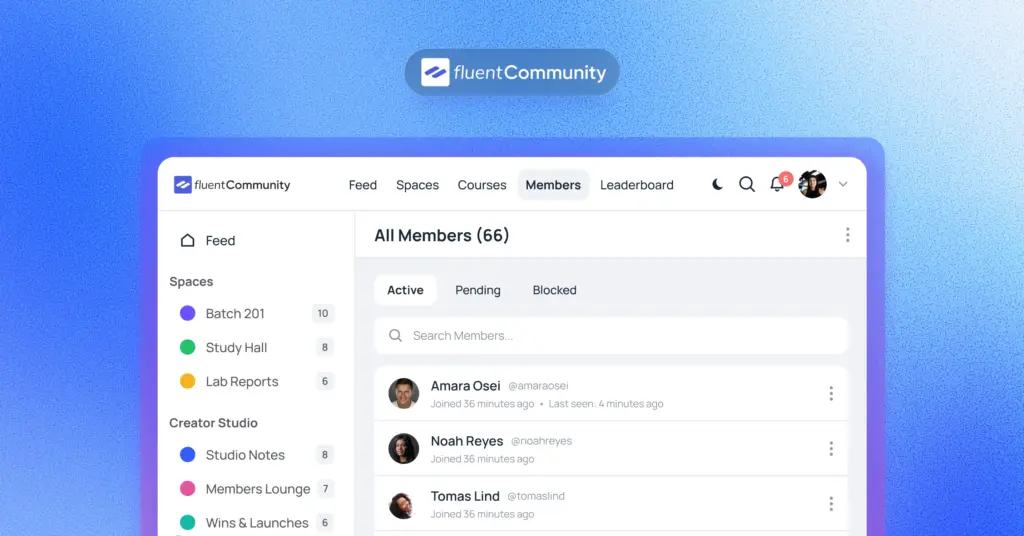
FluentCommunity’s built-in leaderboard ranks users by contribution posts, replies, and reactions. This taps into a fundamental human motivation: recognition among peers. Your most helpful users will compete (often unconsciously) to maintain their ranking.
Make it visible. Feature top contributors in your monthly newsletter. Give them shoutouts in announcements. Recognition costs nothing and builds fierce loyalty.
Badges for Specific Behaviors
Go beyond generic participation badges. Create meaningful ones:
- Bug Hunter: Awarded for reporting confirmed bugs
- Solution Provider: For users whose answers get marked as solutions
- Beta Pioneer: For active beta testers
- Integration Wizard: For sharing workflow automations
Badges work because they create identity. A user who earns “Solution Provider” starts seeing themselves as a helper and acts accordingly.
Polls for Feature Prioritization
When you’re deciding between three features for your next release, don’t guess poll. Post the options in your Feature Requests space and let the community vote.
This does two things: it gives you validated priorities, and it gives users ownership over the product direction. When you ship the winning feature, the community feels like they built it with you. Because they did.
Activity Feeds and Mentions
FluentCommunity’s activity feed keeps the community feeling alive. When users see constant activity, new posts, replies, and reactions, they’re more likely to engage. Mentions pull specific people into conversations, creating direct connections.
Regular Rituals
Establish recurring community events:
- Feature Friday: Weekly post previewing what your team is working on
- Monthly AMA: Your product lead answers community questions live
- Quarterly Roadmap Review: Share your roadmap, gather feedback, adjust priorities
Rituals create habit. Habit creates retention.
The Metrics That Matter
Community-led growth is harder to attribute than paid acquisition. Nobody fills out a form saying, “I bought because I read a forum thread.” But the signal shows up in a few places: Self-reported acquisition source. Add “How did you hear about us?” to your onboarding. “Word of mouth” and “community/forum” attribution will tell you if CLG is working.
Community activation rate. What percentage of new customers join your community within 30 days? This predicts retention. Users who join the community stay longer and expand their usage more. Question-to-answer ratio. Are users answering each other, or is your team answering everything? A healthy community has a high percentage of user-generated answers. Monthly active contributors. Not just readers who post, answer, or share at least once per month. This is your community health metric.
What does this mean for FluentCommunity?
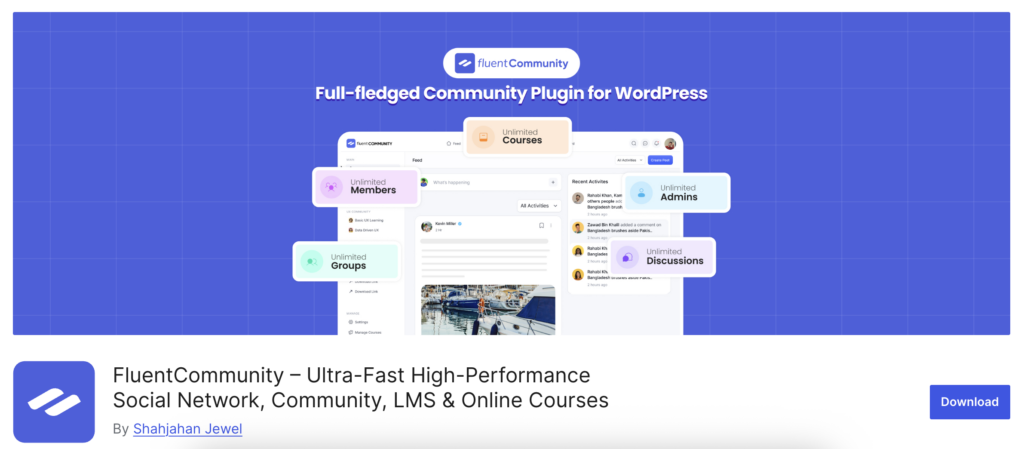
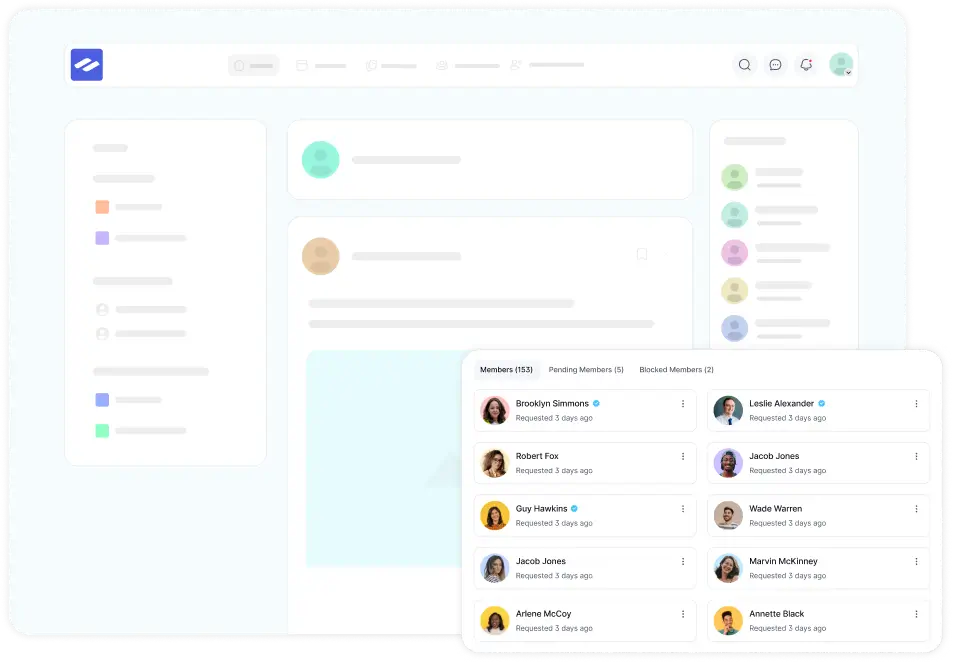
FluentCommunity exists because this whole motion requires infrastructure. Running a community inside someone else’s platform means you don’t own the data, you don’t control the algorithm, and you’re always one policy change away from losing your most engaged users. Building your community on your own WordPress site with FluentCommunity means the relationships you build with users live where you can see them, shape them, and retain them indefinitely. The posts, the discussions, the member profiles, the recognition systems, and the private spaces are all under your control.
For WordPress plugin companies specifically, this matters more than it does for most SaaS businesses. Your users are already on WordPress. Meeting them in a community that runs on the same stack they use every day isn’t a barrier to entry. It’s a familiar home.
FluentCommunity is a complete community platform designed for businesses. Download now to create and manage your community.
The Real Reason Community-Led Growth Works
Here’s the honest version: community-led growth is slow to build and hard to measure, and it requires genuine product quality underneath it. You can’t manufacture advocacy. But when it works, the economics are very different from paid acquisition. A user who came through community costs roughly zero to acquire, churns at a fraction of the rate of paid users, and regularly brings in new customers. The compounding effect over three to five years beats almost any other growth channel.
The WordPress companies that have lasted are the ones with loyal user bases, strong renewal rates, and communities that help each other without being asked; all have this in common. They invested in the relationships before they needed to, and the return followed. That’s what community-led growth is. Less a tactic, more a decision about what kind of company you want to be.
To know more, check out the guide about strategies for community-driven e-commerce.
The Bottom Line
Community-led growth isn’t a marketing tactic. It’s an operating model. It changes how you build products, how you support users, and how you grow.
For WordPress product companies, the opportunity is wide open. Most of your competitors are still running the old playbook ads, affiliates, and hope. While they’re buying attention, you can be building something that compounds: a community of users who help each other, improve your product, and bring in new customers because they genuinely want to.
The infrastructure cost is trivial. FluentCommunity runs on the WordPress site you already have, for less than what you spend on a single month of paid ads. The real investment is your attention and consistency.
Start with 50 users who love your product. Give them a place to connect. Listen to what they tell you. Build what they need. Recognize them for contributing. Then watch the flywheel spin.

Prema Anjum
My full name is Anzuman Ara Chowdhury. But people know me as Prema Anjum. I’m a Digital Marketer by profession, a WordPress community contributor, and a travel enthusiast by heart.
Add your first comment to this post