
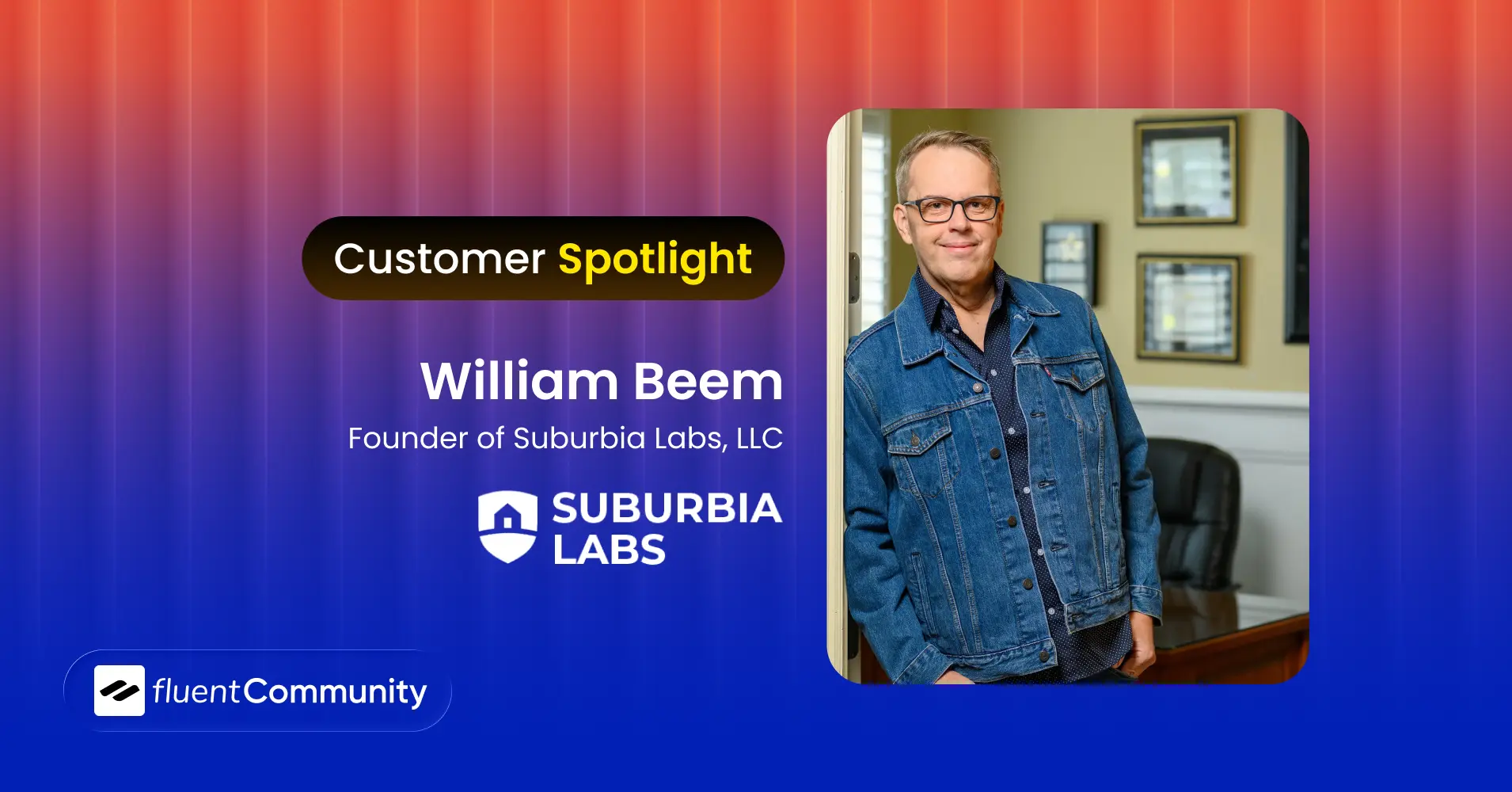
The Smart Way William Reduced His Community Costs

Table of Content
Subscribe To Get
WordPress Guides, Tips, and Tutorials


William had a problem most bloggers would love to have. His audience wanted more from him.
After years of publishing marketing tutorials, case studies, and strategy breakdowns on his blog, his readers were not just consuming content. They were asking questions in the comments, emailing him directly, and replying to his newsletters with messages like, “Is there a place where we can all talk?”
The demand for deeper conversations kept growing. His audience did not only want information. They wanted connection, discussion, and a space to learn from each other.
So William decided to build a community around his content. At first, it felt exciting. Members joined, conversations started, and the space became active. But as the community grew, so did the responsibilities and costs of maintaining it.
Managing the platform, supporting members, and paying for tools quickly became overwhelming. What started as a simple idea slowly turned into a challenge that almost burned him out. This is William’s story.
William’s Background: A Blogger Who Became a Community Builder
William runs a mid-sized marketing blog focused on content strategy, SEO, and audience building. He’s not a household name in the industry, but to his 12,000 newsletter subscribers, he’s the guy they trust when they’re trying to grow their blog without a big budget.
He’d been blogging for about six years when the community idea came up seriously. His readers were mostly solo bloggers and small business owners. People who were trying to build an audience, monetize their content, and figure out the whole content marketing game on their own. They were hungry for peer connection, not just one-way advice from a creator.
William saw the opportunity clearly. A dedicated community would let his audience help each other, reduce the support load on him, and create a stickier experience around his blog. He could offer a membership tier, host live Q&As, and create a real e-learning environment by attaching courses to the community.
He decided to go for it.
The First Attempt: The Platform That Cost Too Much
William’s first choice was BuddyBoss.
It made sense at the time. BuddyBoss is one of the most recognized names in WordPress community building. It has a polished interface, a dedicated app builder, and a large support ecosystem. If you Google “how to build a community on WordPress,” BuddyBoss shows up everywhere.
So he bought the theme and the platform license, set up the community on his existing WordPress site, and started inviting his audience.
The community launched, and it worked technically. But the costs started stacking fast.
Here’s what William was dealing with:
- BuddyBoss Platform license: $228/year
- BuddyBoss Theme: $228/year (bundled but still a cost)
- LearnDash (for courses): $199/year
- Additional plugins for better notifications, onboarding flows, and gamification. Another $150–200/year scattered across multiple tools
- Server upgrades because BuddyBoss with an active community chewed through his shared hosting plan
He was sitting at roughly $800–1,000/year just in plugin and licensing costs, not counting hosting or his time. For a blogger monetizing through a $9/month membership, that’s a heavy baseline to recover before seeing any profit.
“I kept thinking, I’m spending money to make money, which is fine. But the math didn’t feel right. I was basically working to keep the lights on instead of actually growing the thing.”
Then there was the maintenance overhead. BuddyBoss + LearnDash + a stack of supporting plugins meant constant compatibility checks, update juggling, and occasional white screens of death that sent him spiraling into support forums at 11pm.
The community was alive, but William wasn’t enjoying running it.
The Challenges That Made Him Look for Something Better
Beyond the cost, there were three specific friction points that pushed William toward finding an alternative.
The Learning Curve Was Steep for His Members
BuddyBoss is feature-rich, but that richness comes with complexity. New members were confused about where to post, how to find courses, and how to set up their profiles. William spent more time explaining the platform than facilitating actual conversations.
His community was supposed to feel like a clubhouse. It felt like an enterprise intranet.
The Mobile Experience Was Inconsistent
A significant chunk of his audience accessed the community on mobile. The BuddyBoss app option existed, but it was a separate cost and still had rough edges. The web experience on mobile was functional but not great. Members dropped off disproportionately after their first few sessions.
The Course Integration Was Clunky
William had three mini-courses he wanted to make available to community members. In theory, LearnDash and BuddyBoss work together. In practice, the experience felt disconnected like two different products duct-taped together, because that’s essentially what they were.
Members would finish a lesson and land back on the LearnDash interface with no natural path back into the community discussion. The flow was broken.
Discovering FluentCommunity
William found FluentCommunity while doing a routine search for BuddyBoss alternatives. He’d been vaguely aware that there were other options, but he’d assumed they were either too basic or too obscure to trust.
FluentCommunity changed that assumption quickly.
“The first thing I noticed was that it looked like something I’d actually want to use. Not like a WordPress plugin from 2014, like a real product someone had thought carefully about.”
He dug into the documentation, watched a few walkthrough videos, and joined the
FluentCommunity Discord to ask questions. What he heard from other users confirmed what he suspected: this was a plugin built by people who actually used communities, not just built software for them.
The pitch that won him over was simple: one plugin, everything included, no mandatory add-ons, priced in a way that made sense for a small creator.
He decided to migrate.
The Migration: Less Painful Than He Expected
William was nervous about moving an active community. He had members, posts, and course enrollments to think about. He didn’t want to lose the momentum he’d built or confuse the people who’d already paid for access.
He set up FluentCommunity on a staging version of his site first and ran both environments in parallel for about two weeks. He imported his member list, recreated his community spaces, and ported his course content over.
The actual migration took a weekend of focused work, not the week-long project he’d feared.
He announced the change to his members with a short post explaining why: “I’m switching to something cleaner, faster, and honestly, something I’m excited to use again.” Most members shrugged and appreciated the upgrade. A handful asked questions. Nobody left.
How FluentCommunity Changed the Experience
FluentCommunity transformed William’s experience by giving him a simpler, more sustainable way to manage his growing audience. Instead of juggling multiple tools and rising costs, he could host discussions, courses, and member interactions in one place, making it easier to build a thriving community without burning out.
A Cleaner, More Intuitive Space for Building a Blog Marketing Community
The first feedback William got after the migration wasn’t about features. It was about feel. Members said the new space felt less cluttered. They could find things. The onboarding made sense.
For William, that translated directly into less time spent answering “where do I post this?” questions in his inbox.
The community feed, spaces, and member profiles all worked together in a way that felt native rather than assembled. New members could figure things out without a tutorial, which meant William could focus on content and facilitation instead of hand-holding.
Courses Built Into the Community
One of the biggest wins for William was replacing LearnDash entirely with FluentCommunity’s built-in course functionality.
His three mini-courses were rebuilt inside FluentCommunity, and the difference in member experience was immediate. After completing a lesson, members land back inside the community. Where they can post questions, discuss what they learned, and interact with other students. The course and the community are the same place, not two separate destinations.
“The engagement on my courses went up after the migration. I think it’s because members don’t feel like they’re leaving the community to go take a course. It’s all one thing now.”
The Cost Difference Was Substantial
This is where the numbers get interesting.
FluentCommunity’s pricing is straightforward. William went with an annual license that covers everything community features, courses, member management, the works. No separate LearnDash license. No theme required. No paid add-ons for the features he actually needed.
His total yearly spend on the community platform dropped from ~$900+ to a fraction of that. The savings went back into his actual business better hosting infrastructure, a small advertising budget, and eventually, a part-time VA to help with community moderation.
“I went from spending money to maintain the platform to spending money to grow the community. That’s a completely different feeling.”
Performance on Mobile Improved
FluentCommunity’s mobile web experience is responsive and fast. William’s mobile engagement metrics, session duration, return visits, post interactions, all improved meaningfully in the three months after migration.
He hasn’t needed a separate app. The mobile web experience is good enough that his members don’t ask about one.
Less Time on Maintenance, More Time on Value
With a smaller, more coherent plugin stack, William’s maintenance overhead dropped significantly. He’s not juggling compatibility between BuddyBoss, LearnDash, and a collection of supporting tools anymore. Updates are simpler. The site runs faster. His developer (he has a freelancer he uses occasionally) spends less time on it.
“I probably saved 5–6 hours a month just in technical housekeeping. That doesn’t sound like a lot until you’re a one-person operation and every hour matters.”
Where William’s Community Is Today
About eight months after the migration, William’s blog marketing community has grown to just over 400 paying members. He runs two live Q&A sessions per month inside the community, has published two new mini-courses, and is planning a third.
His churn rate is lower than it was on BuddyBoss. He attributes that partly to the better user experience and partly to the stronger sense of place the community now has members feel like they belong somewhere specific, not just that they have access to a forum.
He’s also been able to invest in the community in ways he couldn’t before. He now has a proper welcome sequence for new members, a monthly community digest, and a peer accountability program he built using FluentCommunity’s group features.
“The community is a real part of my business now. Before, it was kind of a liability I was managing. Now it’s an asset.”
What Small Business Owners Can Learn From William’s Story
William’s situation isn’t unique. A lot of bloggers and small business owners hit the same wall: they want to build a community around their audience, they reach for the most well-known tool, and then they get stuck in a cycle of high costs and high maintenance that makes the whole thing feel unsustainable.
A few things stand out from his experience that are worth taking away:
Start with the total cost, not the sticker price. BuddyBoss isn’t unreasonably priced as a standalone product. The problem is what it requires around it. Add up everything you’d need to run a functional community and course experience, and the number is much higher than the headline license fee.
Platform complexity has a real cost. Every layer you add to your WordPress stack is a potential point of failure and a guaranteed source of maintenance time. Fewer, better-integrated tools almost always beat a bigger stack of specialized ones.
Member experience drives retention. William’s churn dropped not because he changed his content or his pricing. It’s because the community became a better place to be. The platform experience matters more than most creators want to admit.
You don’t need the biggest name in the category. BuddyBoss is dominant in the WordPress community building partly because of timing, marketing, and ecosystem effects. That doesn’t mean it’s the right tool for every use case, especially if your use case is a cost-effective community for a small-but-loyal audience.
Conclusion: Building a Blog Marketing Community Without Breaking Your Budget
Building a community around your blog or content business is one of the best things you can do for long-term audience retention and revenue. But the platform you choose matters. Not just for your members’ experience, but for your own sustainability as a creator.
William’s story is a reminder that the most-talked-about tool isn’t always the right one, and that switching costs are usually lower than they feel. He spent one weekend migrating and has since saved hundreds of dollars a year, recovered hours of monthly maintenance time, and built a community he’s actually proud of.
If you’re running a blog, a coaching business, or any kind of content operation and you’ve been putting off building a community because the platform options felt too expensive or too complex, FluentCommunity is worth a serious look.
The math worked for William. It might work for you, too.

Prema Anjum
My full name is Anzuman Ara Chowdhury. But people know me as Prema Anjum. I’m a Digital Marketer by profession, a WordPress community contributor, and a travel enthusiast by heart.
Leave a Reply