
How to Build a Paid Membership Community on WordPress

Table of Content
Subscribe To Get
WordPress Guides, Tips, and Tutorials


Paid online communities are having a moment, and it’s not slowing down. Creators, coaches, educators, and entrepreneurs are ditching ad-dependent social platforms and building private spaces where members pay for access. The math is simple: a few hundred members paying a monthly fee can generate serious recurring revenue. No sponsors. No algorithms. Just direct value exchanged for recurring income.
But here’s the catch. Most people hit the tools to build these communities are expensive. Platforms like Circle and Skool charge monthly subscription fees that add up to thousands of dollars per year.
What if you could build the same quality community with courses, spaces, leaderboards, and a modern UI for a one-time cost with no recurring platform fees?
That’s exactly what this guide covers. You’ll learn how to build a fully functional paid membership community on WordPress using FluentCommunity, step by step, from choosing hosting to collecting your first payment.
No coding. No duct-taping five plugins together. Just a clear path from idea to launch.
Why Build Your Community on WordPress?
Most people go straight to hosted platforms. And honestly, that’s understandable. They’re fast to set up. But there’s a real cost you don’t see upfront. When you build on a hosted platform, you’re renting.
You pay every month, and if you ever cancel, you lose everything. Your content, your member data, and your community. You also play by their rules. Pricing changes, feature removals, and algorithm updates are all outside your control.
WordPress flips this completely. You own the code, the data, and the domain. No platform can change your pricing, limit your members, or shut you down.
Here’s what this looks like in practice:
- Hosted platforms: Recurring monthly fees, limited customization, platform risk
- WordPress: One-time plugin cost, full control, no platform dependency
For creators who are serious about building something long-term, WordPress is the smarter foundation.
What You’ll Need
Before we get into the steps, here’s the full stack we’re building with:
| Component | Tool | Cost |
| Hosting | Any managed WordPress host | Varies |
| WordPress | WordPress.org (free) | Free |
| Community | FluentCommunity | One-time purchase |
| Payments | WooCommerce or FluentCart | Free/paid |
| FluentCRM or FluentSMTP | Free tier available |
That’s it. No five-plugin Frankenstein. FluentCommunity handles the heavy lifting, spaces, courses, leaderboards, member profiles, and access control, all in one plugin.
Step 1: Choose the Right Hosting
Your hosting is your foundation. Get this wrong, and everything else is slower and harder.
For a membership community, you need a host that can handle:
- Consistent uptime
- Fast page loads
- Easy WordPress installation
- SSL certificate
SiteGround is a solid starting point. Their managed WordPress plans include free SSL, daily backups, and one-click WordPress installs. Good performance for the price. For a new community, SiteGround’s GrowBig plan gives you everything you need without overpaying.
Kinsta is the premium option. Faster, more reliable, and excellent support. Worth it if you’re planning to scale past a few hundred members quickly.
Cloudways is another great option. It offers managed cloud hosting on providers like DigitalOcean, AWS, and Google Cloud, giving you strong performance and flexibility without needing deep server management knowledge.
Rocket.net is also worth considering. It’s a fully managed WordPress host with built-in Cloudflare Enterprise, making it extremely fast and secure for growing communities.
Step 2: Install WordPress
Once you have hosting, install WordPress. Every quality host has a one-click installer; look for it in your control panel or cPanel.
The process takes about two minutes:
- Log in to your hosting dashboard
- Find “WordPress Installer” or “Softaculous”
- Enter your domain, admin email, and password
- Click Install
Done. You now have a fresh WordPress site.
Step 3: Install FluentCommunity
FluentCommunity is the engine that powers everything. The community spaces, member profiles, activity feeds, courses, and access control.
To install it:
- Purchase FluentCommunity from their website and download the plugin zip file
- In WordPress, go to Plugins > Add New > Upload Plugin
- Upload the zip file and click Install Now
- Activate the plugin
After activation, FluentCommunity will walk you through an initial setup wizard. Go through it. It sets up your community’s basic structure and creates the main community page on your site.
Set up your community profile
Before adding spaces or content, start by filling in the basics. Set your community name, which is what members will see at the top of the platform. Then upload your community logo and cover image because first impressions matter, and they help establish your brand. Next, add a welcome message that appears on the community home page so new members immediately understand what the community is about.
Finally, configure the member profile fields such as name, bio, social links, or any details that are important for your niche. This step only takes about 15 minutes, but it sets the tone for everything that follows.
Step 4: Create Your Community Spaces
Spaces are the core organizational unit in FluentCommunity. Think of them as channels or rooms. Each one focused on a specific topic or purpose.
A well-structured community has spaces that match what members actually need. Here’s a starter structure that works across most niches:
Welcome Space
The first place new members land. Post your community guidelines, a “start here” introduction, and a welcome thread where people introduce themselves.
Main Discussion
The general feed where members post questions, share wins, and have conversations. This becomes the heartbeat of your community.
Resources
A curated space for documents, templates, links, and tools. Members love a place they can bookmark and return to.
Wins & Milestones
A dedicated space for celebrating progress. This drives engagement — people check in just to see what others are achieving.
Questions & Help
Separating questions from general discussion keeps things organized and makes it easier to ensure questions get answered.
To create a space in FluentCommunity:
- Go to your community dashboard
- Click “Spaces” in the left menu
- Click “Create Space”
- Add a name, description, and icon
- Set visibility (public to all members, or restricted to specific plans)
You can create as many spaces as you need. But start lean. A community with five active spaces beats one with twenty empty ones.
Step 5: Set Up Courses
If your community includes educational content like lessons, tutorials, and how-to videos, FluentCommunity has a built-in course builder. This is where the value proposition gets strong. Other platforms charge separately for courses. FluentCommunity includes it.
To create a course:
- Go to Courses in your community dashboard
- Click “Create Course”
- Add your course title, description, and cover image
- Create sections (chapters) and add lessons inside each section
- Upload video lessons, add text content, or embed YouTube/Vimeo links
Lessons can be:
- Video (uploaded or embedded)
- Text with rich formatting
- Mixed video with text notes below
You can gate courses to specific membership tiers. More on that in the next step.
A note on course content: Don’t try to build everything before launching. A focused mini-course of 5-8 lessons is enough to justify a paid membership. You can add more over time. Members who join early will stay for the community anyway the courses are a bonus.
Step 6: Configure Membership Access and Payment
This is the step where your community becomes a business.
FluentCommunity handles access control. Who can see what. For payments, you’ll connect it to a payment plugin. The two options are:
Paymattic: A powerful WordPress payment and subscription plugin that lets you accept payments, manage recurring subscriptions, and sell memberships directly from your site. It integrates smoothly with tools like Fluent Forms and works well for community platforms without the complexity of a full eCommerce system.
FluentCart: A newer option from the same team that builds FluentCommunity. Cleaner interface, no transaction fees, and tighter integration with the FluentCommunity ecosystem.
Setting Up with Paymattic
Install and activate Paymattic on your WordPress site. Connect your preferred payment gateway (such as Stripe or PayPal) from the Paymattic settings so you can start accepting payments.
Next, create a subscription plan for your membership. Give the plan a name, set the price, and choose the billing interval, such as monthly, quarterly, or yearly.
Then go to FluentCommunity. Access Settings and connect the Paymattic subscription plan to your community or specific spaces.
Once everything is connected, when a member purchases the subscription through Paymattic, they automatically get access to the linked spaces and courses in FluentCommunity. If their subscription expires or is canceled, their access is automatically revoked.
Setting Up with FluentCart
If you’re already in the FluentCommunity ecosystem, FluentCart is worth considering. The setup is similar:
- Install FluentCart
- Create your membership product with the pricing and billing period
- Connect it to FluentCommunity spaces in the access settings
FluentCart charges zero transaction fees, which adds up meaningfully at scale.
Step 7: Set Up Member Onboarding
First impressions determine whether someone stays or ghosts. Most communities lose members in the first 48 hours because there’s no clear “what do I do next?”
Let’s fix this with a structured onboarding flow:
Welcome email: Send automatically when someone joins. Tell them what to do first. Introduce themselves, visit a specific space, and complete a lesson. FluentCRM can handle this automatically.
Pinned welcome post: In your Welcome Space, pin a post that walks new members through the community structure. Where to start, where to ask questions, what to expect.
Introduce yourself thread: Create a pinned thread in your Welcome Space asking members to introduce themselves. Seed it with your own introduction. This becomes a first action for every new member, low-pressure, high-connection.
Check-in at Day 3 and Day 7: Automated emails that ask if they’ve had a chance to explore, remind them of valuable spaces, and invite them to reach out with questions. Again, FluentCRM handles this without any manual work.
The goal: within the first week, a new member should feel like they belong, know where to find value, and have interacted with at least one other person.
Step 8: Collect Your First Payment
You’ve set up the community. You’ve configured payments. Now it’s time to actually get members in.
Here’s a simple launch sequence that works:
Pre-Launch (1-2 weeks before opening)
Build a waitlist. Create a simple landing page on your WordPress site (or even a Google Form) that lets people sign up to be notified when you open. Share it in your existing audience, email list, social media, wherever you already have followers.
Your landing page needs three things:
- A clear statement of who this is for and what they get
- Social proof (your background, testimonials if you have them)
- A call to action to join the waitlist
Soft Launch
Open to your waitlist first with a founding member offer a lower price, locked in forever. Give them 48-72 hours before you open to the public.
This creates urgency and rewards your most engaged followers. It also gets your first 10-30 members in before the general launch, which means there’s already activity when new members arrive.
Public Launch
Open your community to the public. Announce it to your email list, social channels, and anywhere else your audience lives. Be specific about the value: what transformation does membership offer, who is it for, what’s included.
For your payment page, keep it simple. Your WooCommerce or FluentCart product page serves as your checkout. Make sure it loads fast, works on mobile, and the checkout process is clean.
Step 9: Keep Members Engaged
Acquisition is one problem. Retention is a different one, and it’s where most community builders fail. Members cancel when they stop getting value. Value comes from two sources: the content you provide, and the connections they make with other members.
Content rhythm: Post consistently. Not every day, but on a predictable schedule. A weekly AMA, a monthly deep-dive, a daily prompt in a discussion space, whatever matches your capacity. Consistency signals that the community is alive and growing.
Highlight members: Feature member wins, spotlight interesting introductions, respond to questions quickly. When members see that participation is noticed, they participate more.
Gather feedback: Ask members what they want. Run a monthly poll, send a quarterly survey, or simply ask in your main discussion space. Acting on feedback creates loyalty.
Track engagement, not just subscriber count: FluentCommunity shows you who’s active and who isn’t. Members who haven’t logged in for 30 days are at risk. A simple re-engagement email, “We miss you, here’s what’s been happening,” can recover a meaningful percentage.
Common Mistakes to Avoid
Launching too late. You don’t need 50 spaces and 10 courses before you open. Launch with the minimum viable community and build alongside your members.
Underpricing to attract volume. Low prices attract the wrong members. People who aren’t committed and churn fast. Higher prices attract people who take it seriously and stay.
Not having a niche. “Community for entrepreneurs” is too broad. “Community for e-commerce founders doing $100K-$1M in annual revenue” is specific enough to build something real.
Ignoring the onboarding. If new members don’t know what to do, they’ll do nothing. And they’ll cancel.
Building alone. Recruit 3-5 “founding members” before you launch. People you trust who will post, engage, and give honest feedback. They become the culture carriers.
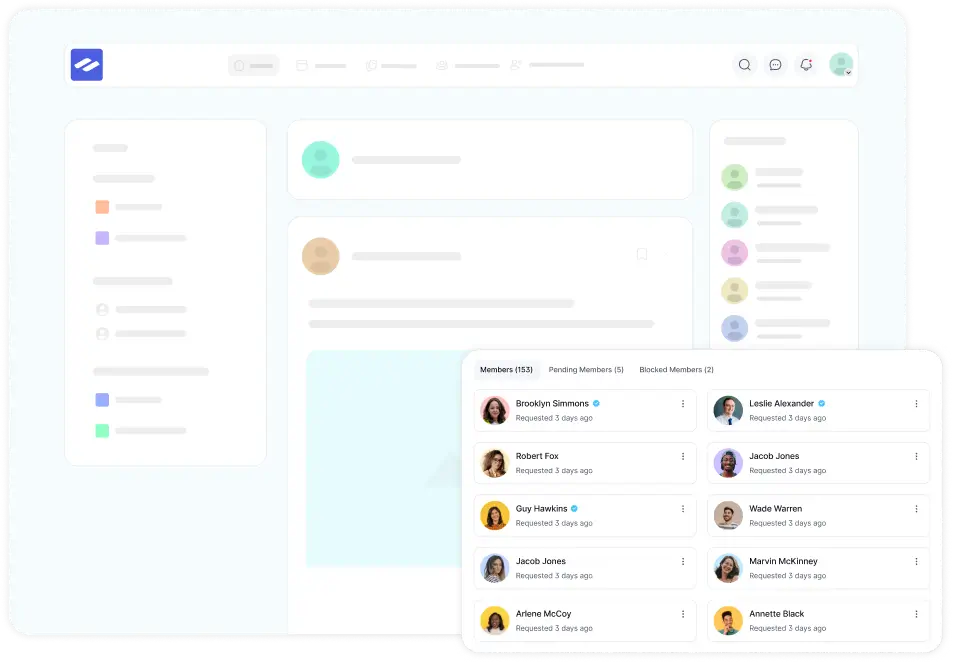
FluentCommunity is a complete community platform designed for businesses. Download now to create and manage your community.
Final Thoughts
Building a paid membership community is one of the most sustainable revenue models available for creators and educators. No algorithm dependency. No platform risk. Just direct value, directly paid.
The setup takes a weekend. The real work is building something your members can’t imagine leaving.
Start with FluentCommunity, pick a niche you genuinely understand, price it seriously, and launch before you feel ready. Your first 20 members will teach you more about what your community should be than any planning session will.
The platform is the easy part. The community is the work.

Prema Anjum
My full name is Anzuman Ara Chowdhury. But people know me as Prema Anjum. I’m a Digital Marketer by profession, a WordPress community contributor, and a travel enthusiast by heart.

Leave a Reply