

Online Community Engagement Strategy: How to Build a Community People Actually Use

Table of Content
Subscribe To Get
WordPress Guides, Tips, and Tutorials


Most online communities don’t fail because the platform is bad. They fail because nobody gave members a reason to come back. You can have the cleanest design, the nicest logo, and the best onboarding flow in the world. If members join, lurk for a day, and disappear, you don’t have a community. You have a sign-up list with a chat box attached.
An online community engagement strategy is the difference between a quiet space and a living one. It tells people why to show up, what to do once they get there, and how to keep them participating long enough for real relationships to form. If you’re building your community on WordPress, FluentCommunity gives you the structure to make this work without duct tape. You can create spaces, guide behavior, spotlight members, and build repeat engagement into the product itself. This article walks through how to build that strategy step by step.
What Online Community Engagement Strategy Actually Means?
An online community engagement strategy is the plan for getting members to participate regularly, not just join once. That includes:
- Posting
- Commenting
- Reacting
- Asking questions
- Answering others
- Attending events
- Returning after the first visit
- Inviting other people in
Many teams confuse community growth with community engagement. They are not the same thing. Growth is getting members in. Engagement is making them stay active. If your community grows by 500 members and only 20 of them ever post, the problem is not acquisition. The problem is engagement design.
Why Engagement Matters More Than Member Count?
A community with 100 active members is usually worth more than a community with 10,000 dead accounts. Why? Because active members create value for each other. They answer questions, share ideas, give feedback, and make the space feel alive. That activity becomes the reason new members stay. Engagement also affects:
- Retention
- Trust
- Referrals
- Product feedback
- Customer loyalty
- Content creation
If you run a WordPress business, this matters even more. Your community should not just sit beside your product. It should help people use your product better, learn faster, and connect with others who have the same goals.
That is where FluentCommunity fits well. It turns engagement from a vague marketing goal into a set of actions you can actually design.
The 5 Pillars of Community Engagement
If you want members to stay active, build around these five pillars.
Clear Purpose
People need to know why the community exists. If the purpose is fuzzy, engagement drops. Members don’t know whether to ask questions, share wins, or just browse. A good community purpose sounds like this:
- A place for customers to get help and share workflows
- A space for creators using our tools to learn from each other
- A private hub for members to discuss ideas, post questions, and get feedback
FluentCommunity helps here because you can build separate spaces for different purposes instead of stuffing everything into one messy feed.
Good Onboarding
New members should know exactly what to do within their first five minutes in your community. Most people don’t engage simply because they’re unsure where to start, which often leads to silence. That’s why your onboarding experience needs to clearly answer a few key questions: what this community is about, where they should go first, what they’re expected to post, who they can follow, and what a good contribution looks like.
Inside FluentCommunity, you can make this easier by using welcome posts, pinned content, and well-structured spaces to guide them. The less confusion and friction you create on day one, the higher your chances of turning new members into active participants.
Repeating Participation Hooks
People return when there is something new, useful, or social waiting for them. That means you need recurring reasons to come back:
- Weekly prompt
- Member spotlights
- Q&A threads
- Challenges
- Discussion topics
- Event reminders
- Progress check-ins
Don’t rely on random posting. Build recurring rituals.
Recognition
People contribute more when they feel seen. Recognition does not have to mean prizes. Most of the time, it means:
- Calling out helpful members
- Featuring great posts
- Thanking people publicly
- Promoting active contributors to moderators or ambassadors
A good community rewards behavior you want repeated.
Useful Interaction
Not all engagement is equal. While random emoji reactions are fine, they don’t create much real value on their own. The most meaningful engagement is useful. When someone helps solve a problem, shares a practical workflow, offers honest feedback, posts a helpful template or checklist, or asks a question others were hesitant to bring up.
This is the kind of interaction that truly moves a community forward. FluentCommunity supports this by offering structured spaces, detailed member profiles, and organized conversations, making it easier to encourage purposeful and valuable interactions rather than just surface-level activity.
How to Build an Engagement Strategy with FluentCommunity
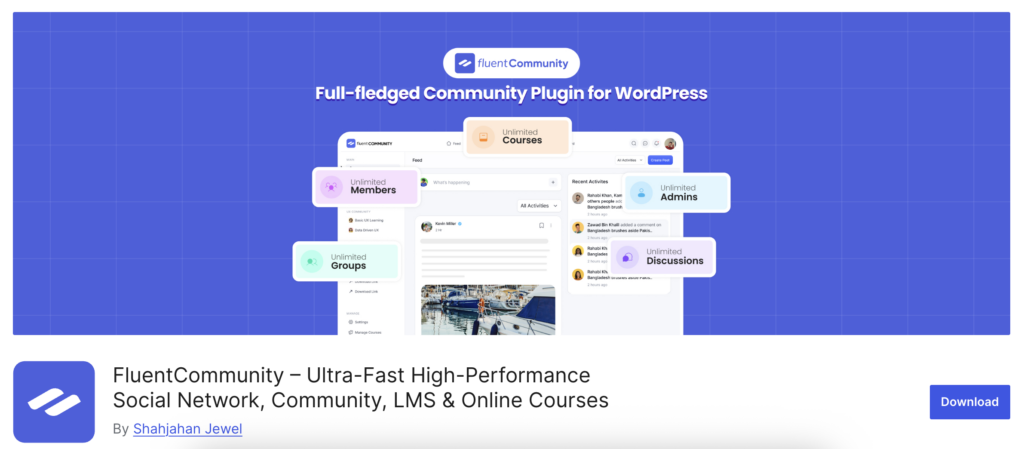
Building a thriving community doesn’t happen by chance. It requires a clear plan and consistent effort. In this guide, you’ll learn how to build an effective engagement strategy using FluentCommunity to turn passive members into active participants and create meaningful, lasting interactions.
Step 1: Define the community goal
Before posting anything in your community, it’s important to clearly define its purpose. Your community could be built around goals like customer support, product education, peer connection, onboarding, user feedback, lead nurturing, or retaining paid members. While a community can serve multiple purposes, you should always identify one primary goal to guide your strategy.
For example, if your main focus is customer retention, your engagement should revolve around support questions, how-to content, showcasing wins and use cases, sharing feature updates, and creating strong customer feedback loops.
On the other hand, if your goal is peer networking, you should prioritize activities like member introductions, spotlights, open discussions, collaborations, and engaging prompts that encourage interaction.
Step 2: Create spaces by intent
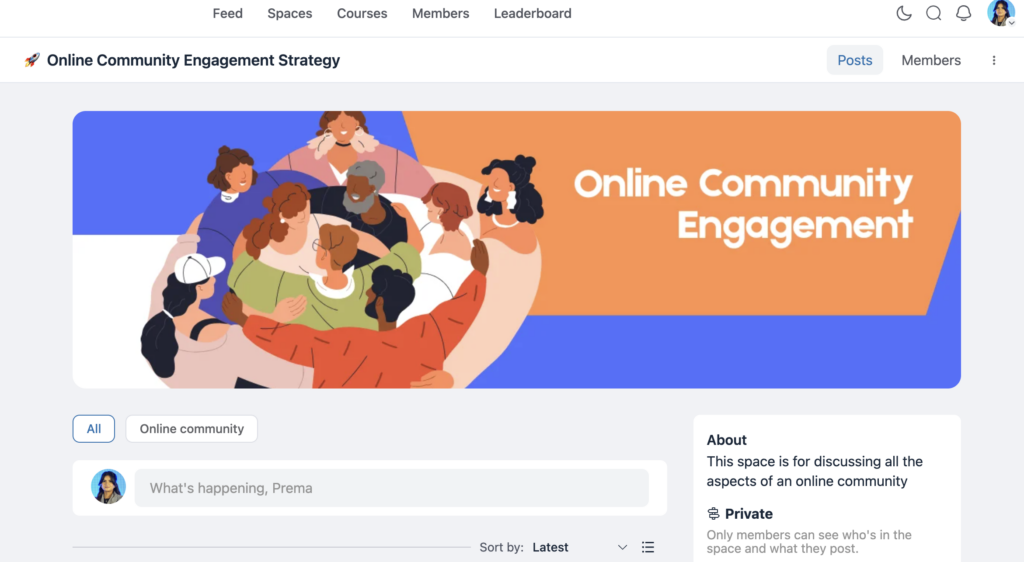
Don’t just throw everyone into a single feed and expect meaningful engagement. Instead, organize your community into clearly defined spaces based on specific use cases. For example, you can have dedicated areas for announcements, introductions, questions, wins, templates, feedback, events, and even off-topic chats. This kind of structure allows members to naturally find where they belong.
Those looking for help can go straight to the questions section, those seeking inspiration can explore wins, and those wanting updates can check announcements. By helping members self-sort in this way, you reduce noise, make navigation easier, and ultimately encourage more active and relevant participation.
Step 3: Seed the first 30 days
A community doesn’t become active by accident. You have to intentionally seed it from the beginning. For the first month, it’s important to plan your content in advance, including things like three welcome posts, four weekly prompts, two member spotlights, two helpful tutorials, one open Q&A thread each week, and at least one event or live discussion.
If you’re launching with FluentCommunity, use this early phase to model what good participation looks like for your members. Encourage engagement with prompts such as introducing themselves and sharing what they’re building, posting a workflow that saves time, discussing their biggest challenges around a topic, or sharing a successful example and explaining why it worked.
By actively seeding content and interactions early on, you set the tone and create momentum before expecting the community to sustain itself.
Step 4: Build engagement loops
A strong community runs on engagement loops, not one-off posts. A typical loop starts when you post a prompt, members respond, others join in by replying to those responses, and then you highlight the best answer. That recognition motivates more people to participate the next time, creating a compounding effect on engagement.
For example, you can build a simple weekly rhythm: on Monday, ask members what they’re working on; on Tuesday, reply thoughtfully to a few posts; on Wednesday, feature a standout response in a spotlight post; on Thursday, ask a follow-up question; and on Friday, summarize the best ideas from the week. This kind of consistent flow keeps the community active without constantly launching new campaigns. At the same time, you should use member behavior to guide your content. Pay attention to patterns.
if members repeatedly ask the same question, turn it into a pinned guide, FAQ post, short video, template, or even a dedicated space. If people frequently share wins, create a recurring wins thread, and if they enjoy giving each other feedback, consider hosting a monthly review session. The best engagement strategies evolve naturally by following what your members already care about and do. It does not fight it.
FluentCommunity is a complete community platform designed for businesses. Download now to create and manage your community.
12 Tactics That Increase Community Engagement
Growing an active community isn’t about luck. It’s about using the right tactics consistently. In this section, you’ll discover 12 proven strategies that help spark conversations, encourage participation, and turn quiet members into engaged contributors.
Welcome, every new member
A simple welcome thread can make a big difference. New members who are acknowledged early are more likely to participate.
Ask easier questions
People ignore vague prompts. Ask specific ones. Bad: “What do you think?” Better: “What is the one thing you wish you knew before starting?”
Spotlight members regularly
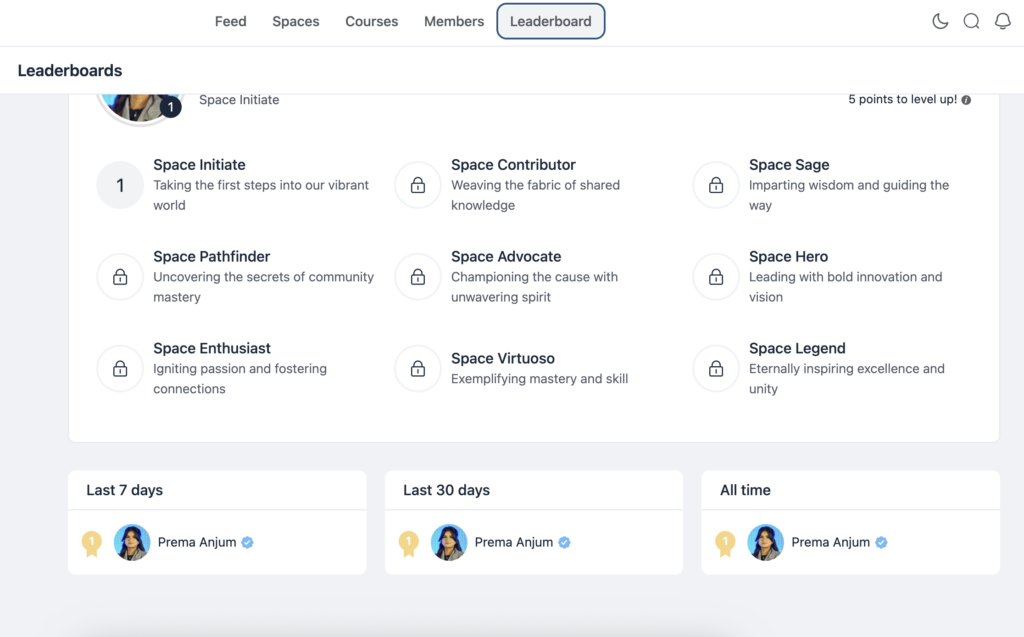
Feature one member each week to highlight their contributions. Ask about what they do, what projects they’re currently working on, and the lessons they’ve learned. This not only recognizes members but also inspires and engages the entire community.
Share templates
Templates are one of the easiest ways to drive engagement because people naturally prefer ready-made structures they can quickly copy, use, and adapt without needing to think too much or start from scratch.
Run weekly threads
Consistency matters more than creativity when it comes to building engagement over time. A simple weekly question, asked regularly, helps members form habits, know what to expect, and participate more easily without needing constant new ideas or complex content strategies.
Celebrate wins
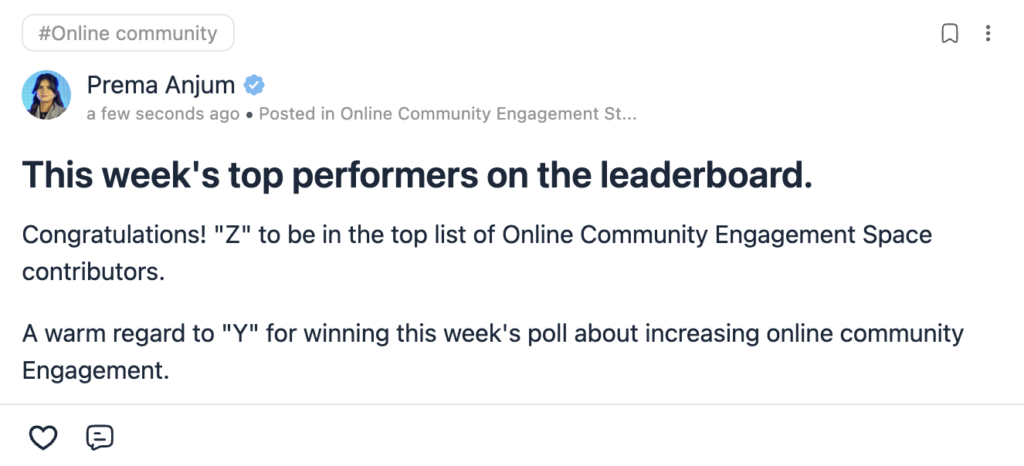
Members stay motivated when they can see that every bit of progress counts, no matter how small. Highlighting achievements, celebrating milestones, and showing growth reinforces that contributions matter, encouraging continued participation and long-term engagement in the community.
Invite feedback on the community itself
Ask members what content or activities they want more of. Giving them a voice fosters a sense of ownership, making them feel valued and more invested in the community’s growth and direction.
Use polls for low-friction engagement
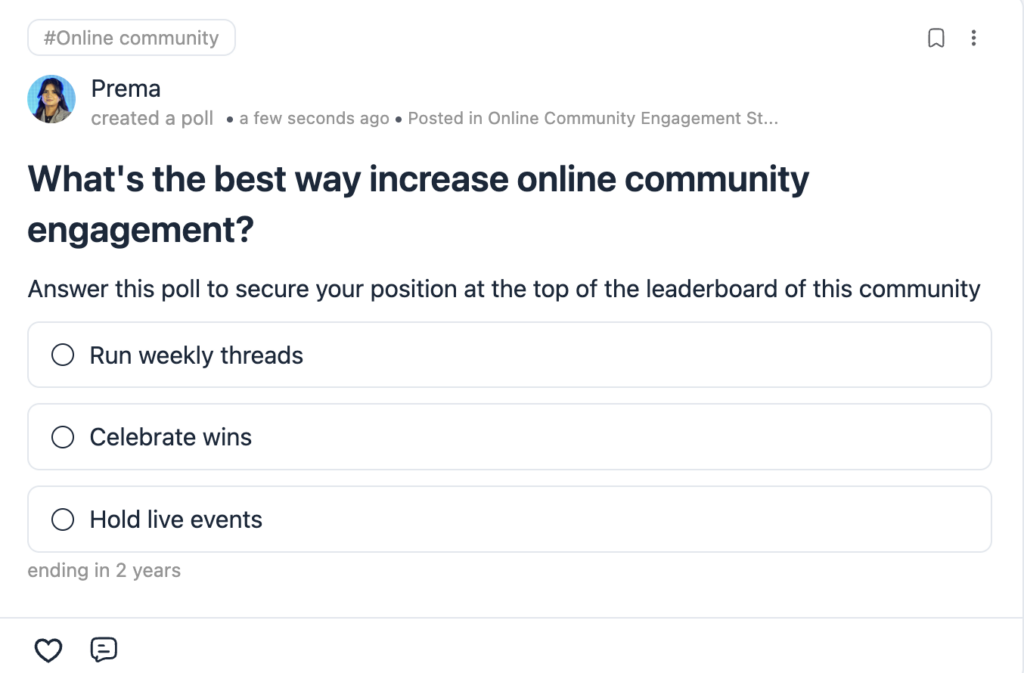
Not every member feels comfortable writing long posts or paragraphs. Polls provide an easy, low-pressure way for quieter members to participate, share their opinions, and engage with the community without feeling overwhelmed or needing to create extensive content.
Hold live events
Not all members enjoy writing long posts or paragraphs. Polls offer a simple, low-pressure way for quieter members to join in, share their opinions, and engage with the community without feeling overwhelmed or having to create detailed content.
Encourage introductions with context
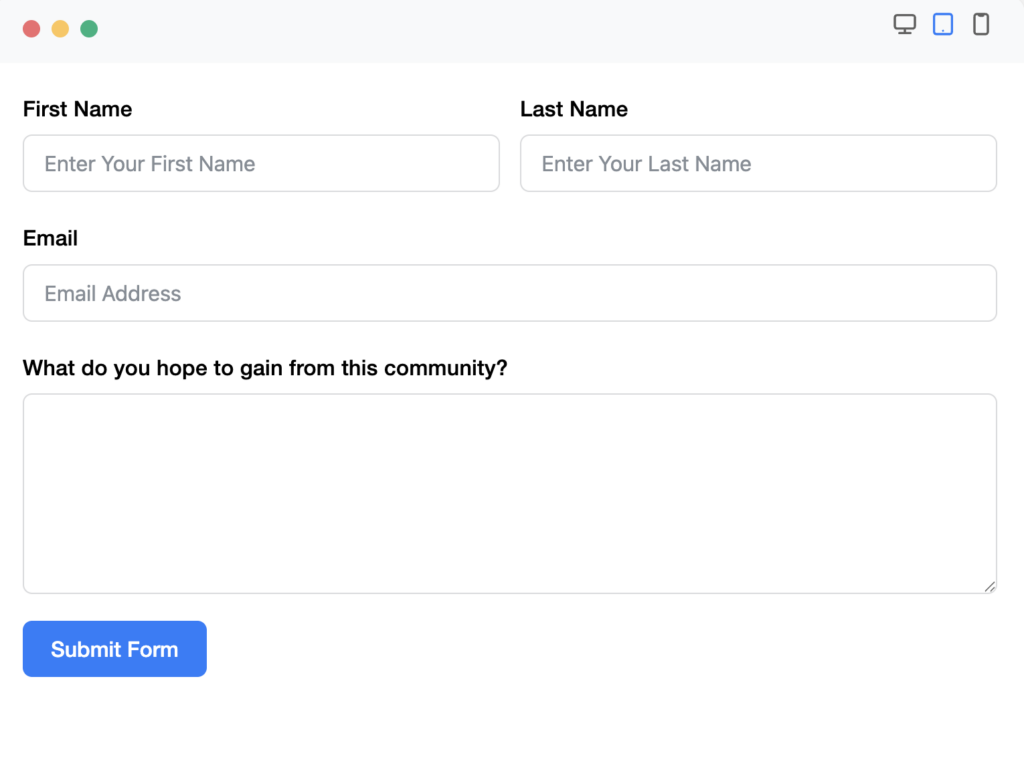
When onboarding new members, don’t just ask for basic details like name, company, or location. Instead, ask what they hope to gain from the community, helping you understand their goals and tailor engagement to their needs.
Make helpful replies visible
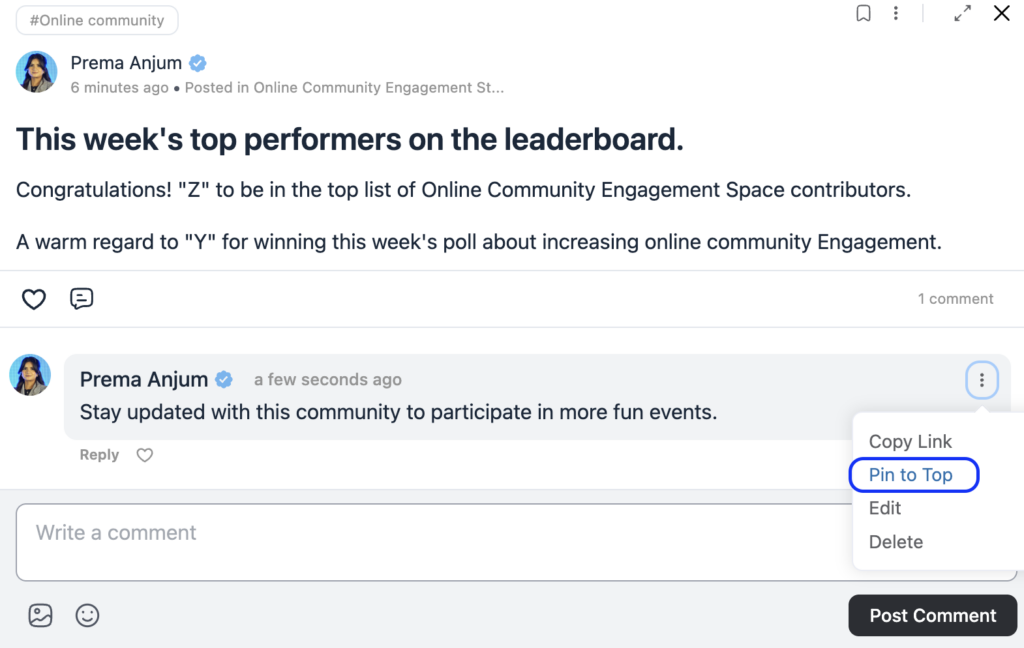
When a member provides a valuable answer, make sure to highlight it. Don’t let great contributions go unnoticed. Showcasing quality responses encourages participation, reinforces helpful behavior, and motivates others to contribute meaningfully within the community.
Keep the space clean
Excessive noise can overwhelm members and reduce engagement. Effective moderation ensures conversations stay relevant, organized, and valuable, helping maintain a positive environment where members feel encouraged to participate consistently.
Common Engagement Mistakes
Even the best communities can struggle with engagement if common mistakes creep in. In this section, we’ll explore frequent pitfalls that hinder participation and how to avoid them for a thriving, active community.
Posting without a rhythm
If your posts are random or unpredictable, members won’t know when or how to engage, making it difficult for them to form consistent habits. Regular, structured posting helps create expectations and encourages ongoing participation.
Making everything about the brand
If every thread in your community feels like a marketing pitch, members will quickly lose interest. Genuine, helpful, and conversational content keeps people engaged, showing that the community values them over promotion.
Asking too much too soon
New members need easy, low-friction ways to get involved. Don’t expect them to write long posts or essays on their first day. Simple prompts, polls, or quick introductions make participation inviting and approachable.
Ignoring quiet members
Lurkers aren’t useless. They often become active contributors over time. Provide them with safe, low-pressure ways to engage, such as polls, reactions, or quick comments, so they can gradually build confidence and become more involved in the community.
Letting the space get messy
A cluttered, disorganized community can feel lifeless even when members are active. Clear structure, defined spaces, and organized content help members navigate easily, participate meaningfully, and recognize that the community is vibrant and engaging rather than chaotic.
Final Thoughts
An online community engagement strategy is not a content calendar. It is a system for helping people show up, participate, and come back. If you build the right structure, members will not need to be forced into activity. They will have clear reasons to join, easy ways to contribute, and enough recognition to keep going. That is the real job of the community. Not just gathering people. Helping them do something worth returning for.
And if you are building on WordPress, FluentCommunity gives you a practical way to make that happen without handing your community to someone else.

Prema Anjum
My full name is Anzuman Ara Chowdhury. But people know me as Prema Anjum. I’m a Digital Marketer by profession, a WordPress community contributor, and a travel enthusiast by heart.
Leave a Reply